-
E-mail
webmaster@rxjd.com
-
Phone
13801568566
-
Address
China
Product Categories
Zhangjiagang Rixin Electromechanical Co., Ltd
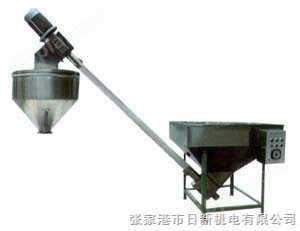
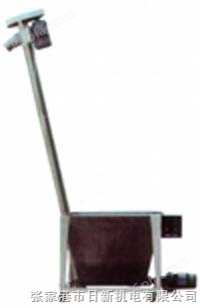
Spiral lifting conveyor
NegotiableUpdate on 01/12
- Model
- Nature of the Manufacturer
- Producers
- Product Category
- Place of Origin
Overview
Spiral lifting conveyor is mainly used for conveying powdered and granular materials between inclined sections. It is one of the many feeder equipment, named after the spiral shape of the material conveying path.
Product Details
Spiral lifting conveyorFeatures:
1) The structure is relatively simple and the cost is low.
2) Reliable work and easy maintenance and management.
3) Compact size, small cross-sectional dimensions, and small footprint. Easy access to hatches and carriages during unloading operations at ports.
4) It can achieve sealed transportation, which is beneficial for transporting materials that are prone to flying, hot, and have strong odors, reducing environmental pollution, and improving the working conditions of port workers.
5) Easy loading and unloading. The horizontal screw conveyor can be loaded and unloaded at any point on its conveying line; The configuration of a vertical spiral conveyor with a relatively spiral material retrieval device can have excellent material retrieval performance.
6) It can be used for reverse conveying or for a conveyor to simultaneously transport materials in two directions, either towards the center or away from the center.
7) The unit energy consumption is relatively high.
8) Materials are prone to crushing and wear during transportation, and the wear of spiral blades and material troughs is also quite severe.
Notes:1. Regularly check the working status of each component of the screw machine during use, paying attention to whether the fasteners are loose. If the parts are found to be loose, immediately tighten the screws and re tighten them.
When the screw conveyor is initially fed, the feeding speed should be gradually increased until it reaches the rated conveying capacity. The feeding should be uniform, otherwise it is easy to cause material blockage and overload of the driving device, which can damage the entire machine as soon as possible.
3. In order to ensure the requirement of no-load starting of the screw machine, the conveyor should stop feeding before stopping, and only stop running after all the materials in the casing have been transported.
4. Hard large pieces of material must not be mixed into the conveyed material to avoid the screw getting stuck and causing damage to the screw machine.
5. It should start without load, that is, start when there is no material inside the shell, and then feed the screw machine after starting.
Maintenance of spiral lifting conveyor:
1. The screw conveyor should not be started under load before feeding into the machine. If any abnormal phenomena occur during the operation of the equipment, it should be stopped for inspection and forced operation is not allowed. There should be no hard large pieces of material inside the conveyed material to prevent the screw from getting stuck and causing damage to the screw machine. At the beginning of feeding, the feeding should be uniform, gradually increasing the feeding speed until it reaches the rated conveying capacity Otherwise, it is easy to cause material blockage during transportation, overload of the driving device, and early damage to the entire machine. In order to ensure the requirement of no-load starting of the equipment, the operation can only be stopped after the materials inside the casing have been exhausted. The conveyor should stop feeding before stopping.
2. Regularly inspect the working status of each component of the screw machine during use If loose parts are found, pay attention to whether the fasteners are loose Then the screws should be tightened immediately and re tightened.
3. Do not remove the chassis cover of the device while the machine is running to avoid danger. Special attention should be paid to whether the screws between the screw connecting shafts are loose If such phenomenon is found, drop or cut off It should be stopped immediately and corrected.
4. Lubricating oil should be added regularly every 3-5 months. The suspension bearing body and suspension shaft should be removed, and the sealing ring should be removed. The suspension bearing and 80000 type bearing should be immersed in melted lubrication, cooled with lubricating grease, and reinstalled for use. If the nylon sealing ring is damaged, it should be replaced in a timely manner. After one year of use, the above methods should be used for maintenance again to achieve good results.