Many blow molding production enterprises have a common misconception when selecting equipment:The more cavities there are, the higher the output and the better the equipment.In actual production, the selection of multi cavity blow molding machines is not necessarily better. The core is to fit their own order structure, replacement frequency, and production capacity requirements, and the most efficient one is to adapt to them.
At present, the mainstream models of hollow extrusion blow molding machines are divided into one out two, one out four, one out six, and one out eight, each with precise adaptation scenarios.
Part.01
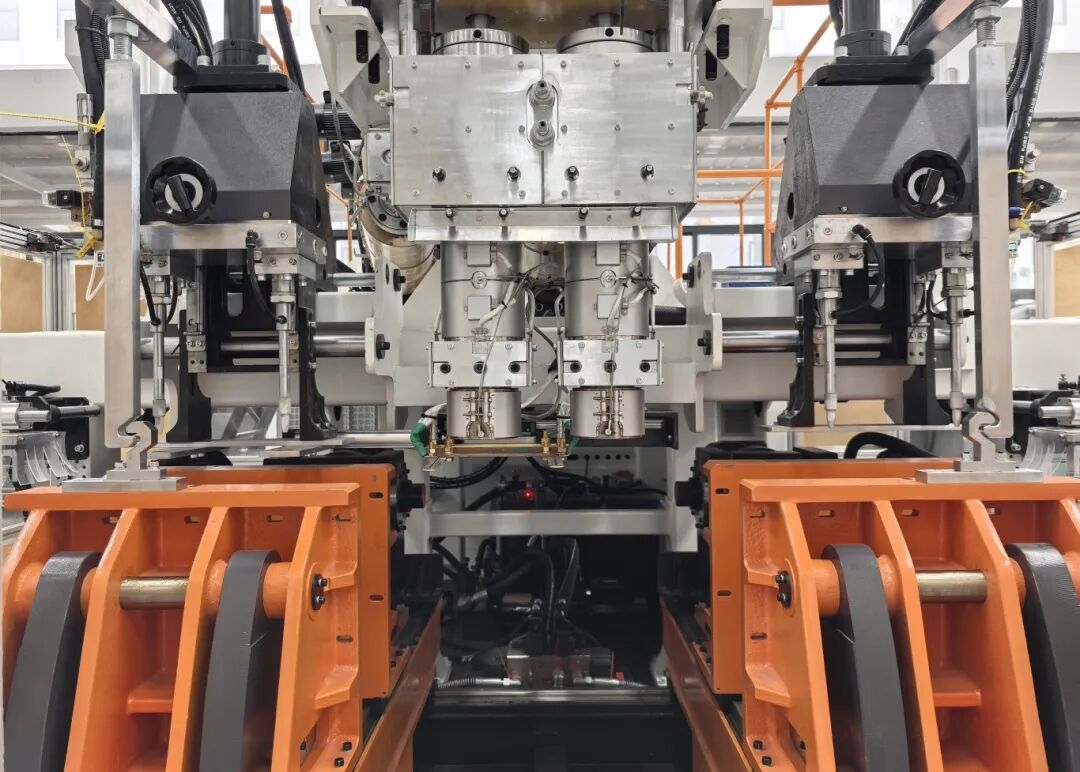
One out of two models:
Universality and stability are preferred.Suitable for the production mode of multiple categories, small batches, and frequent mold changes, with simple debugging, low failure rate, and high fault tolerance, it is the optimal choice for irregular bottles, customized bottles, and small order replenishment scenarios, adapting to the flexible production needs of the vast majority of small and medium-sized processing plants.
Part.02
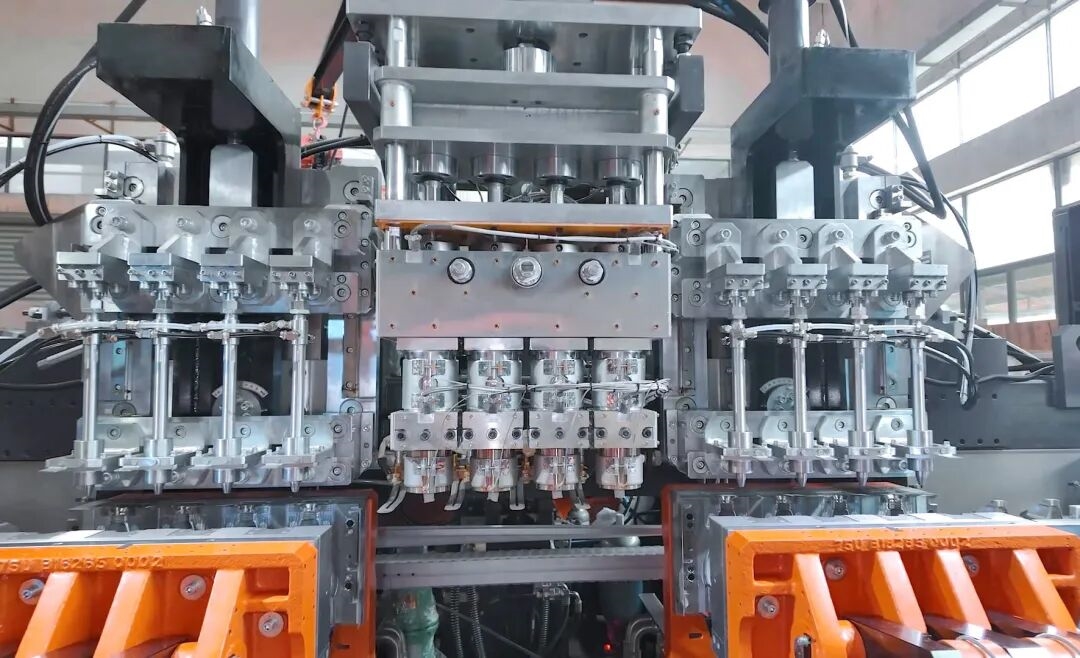
One out of four models:
The king of comprehensive cost-effectiveness.Balancing production capacity and equipment stability, it is suitable for mass production of standardized bottle types such as conventional daily chemical bottles, detergent bottles, disinfectant bottles, etc. It is not easy to produce defects and has low operation and maintenance costs. It is currently the main model for mass production in small and medium-sized packaging factories.
Part.03
One out of six models:
Dedicated for high-speed mass production.Our main focus is on large orders, minimal product changes, and standardized assembly line production. With outstanding advantages in daily production capacity, we are more suitable for large-scale factories, stable foreign trade orders, and continuous mass production of single product categories.
Part.04
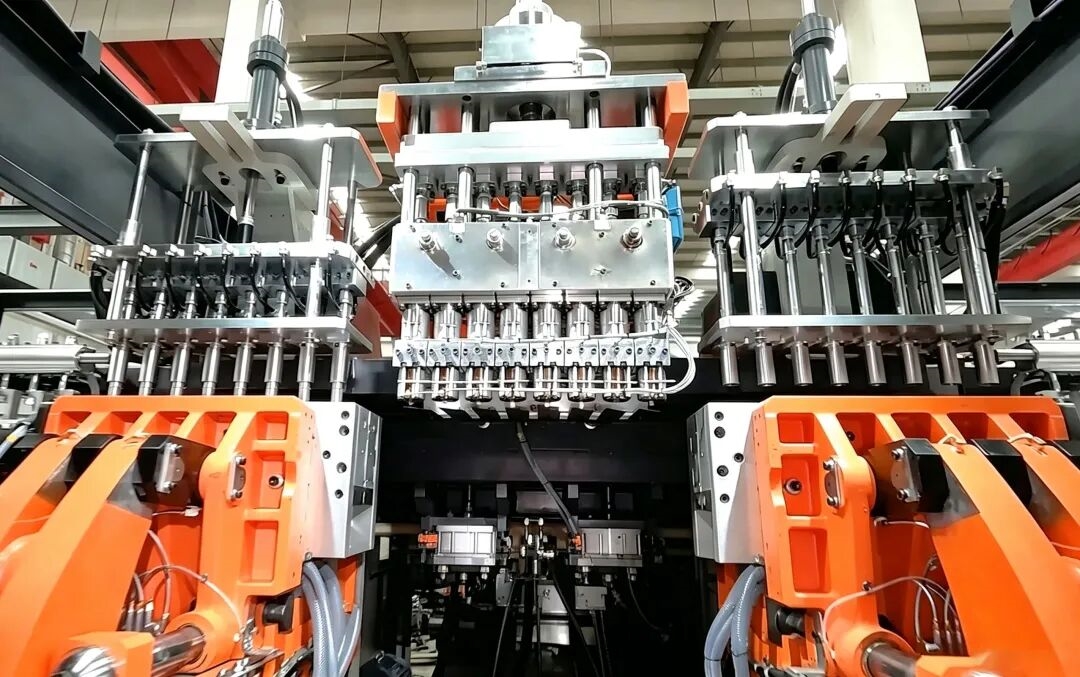
One out of eight models:
Ultra high production capacity high-speed model.Suitable for large-scale continuous production of small standard bottles such as milk bottles, suitable for large-scale assembly lines with minimal changes, with outstanding production capacity advantages, but with specific application scenarios, only suitable for extreme standardized production lines.
Many companies tend to overlook:
The higher the number of chambers in the bottle blowing machine, the higher the technical requirements for equipment rigidity, flow channel balance, servo synchronization, and cooling uniformity. Blindly selecting high cavity models is prone to problems such as uneven weight distribution, molding deviation, and unstable operation, which directly lowers the yield and production efficiency.
To achieve stable and high production, multi cavity equipment needs to be equipped with balanced die heads, precise synchronous timing, and uniform cooling systems to ensure uniform molding and consistent quality of products in each cavity. Having been deeply involved in the field of blow molding equipment for more than 30 years, Leshan Intelligent recommends that enterprises rationally select models based on bottle specifications, order scale, replacement frequency, and factory energy consumption conditions, abandon the misconception of blindly pursuing high cavity numbers, and match models according to needs. This is the key to stable production, cost reduction, quality improvement, and efficiency enhancement of production lines.