-
E-mail
info@cnspump.com
- Phone
-
Address
9F, No. 7, Lane 3088, Gonghe New Road (Xiangteng Fortune Plaza), Shanghai, China
Product Categories
Shanghai Zhongcheng Pump Manufacturing Co., Ltd

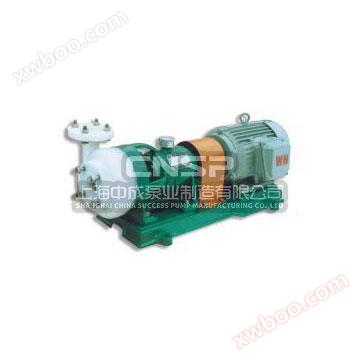
ZX series horizontal self-priming centrifugal pump
NegotiableUpdate on 05/17
- Model
- Nature of the Manufacturer
- Producers
- Product Category
- Place of Origin
Overview
The ZX series horizontal self-priming centrifugal pump is compared with other types of self-priming centrifugal pumps because the pump itself does not have a check valve and has a simple structure; Reliable work; Long trouble free working time, easy maintenance and use, small size, light weight, high efficiency. Special considerations have been made in the design, and compared with pumps of the same caliber, it has a larger displacement and higher performance. The ZX self-priming pump is more effective as an emergency pump in industrial and agricultural production, emergency rescue, such as drainage and firefighting. The ZX type pump is widely used for urban water supply in industrial sectors such as petroleum, chemical, metallurgical, mechanical, chemical fiber, food, energy, transportation, and can also be used for agricultural irrigation and sprinkler irrigation. For conveying clear water or other liquids with viscosity less than 5 ° E and temperature below 80 ° C that have physical and chemical properties similar to clear water.
Product Details
Product Introduction
The ZX series horizontal self-priming centrifugal pump is compared with other types of self-priming centrifugal pumps because the pump itself does not have a check valve and has a simple structure; Reliable work; Long trouble free working time, easy maintenance and use, small size, light weight, high efficiency. Special considerations have been made in the design, and compared with pumps of the same caliber, it has a larger displacement and higher performance. The ZX self-priming pump is more effective as an emergency pump in industrial and agricultural production, emergency rescue, such as drainage and firefighting. The ZX type pump is widely used for urban water supply in industrial sectors such as petroleum, chemical, metallurgical, mechanical, chemical fiber, food, energy, transportation, and can also be used for agricultural irrigation and sprinkler irrigation. For conveying clear water or other liquids with viscosity less than 5 ° E and temperature below 80 ° C that have physical and chemical properties similar to clear water.
scope of application
- Suitable for urban environmental protection, construction, fire protection, chemical, pharmaceutical, dye printing and dyeing, brewing, electricity, electroplating, papermaking, petroleum, mining, equipment cooling, oil tanker unloading, etc.
- Suitable for clear water, seawater, chemical media liquids with acid and alkalinity, and slurries with general paste (medium viscosity ≤ 100 cP, solid content up to 30% or less).
- Equipped with a rocker nozzle, the water can be washed into the air and dispersed into small raindrops for spray. It is a good machine for pesticides, nurseries, orchards and tea gardens.
- It can be used in conjunction with any type and specification of filter press, and is an ideal pump for feeding slurry to the filter press for pressure filtration.
Working principle and structural description
The ZX series self-priming pumps all adopt an axial liquid return pump body structure. The pump body consists of a suction chamber, a storage chamber, a scroll chamber, a return port, a gas-liquid separation chamber, etc After the pump starts normally The impeller sucks in the liquid stored in the suction chamber and the air in the suction pipeline together, and the well is completely mixed inside the impeller under the action of centrifugal force The liquid carries the gas to the outer edge of the scroll chamber and forms a white foam belt with a certain thickness and a high-speed rotating liquid ring on the outer edge of the impeller. The gas-liquid mixture enters the gas-liquid separation chamber through a diffusion tube. At this point, due to a sudden decrease in flow rate, lighter gases are separated from the mixed gas-liquid mixture The gas continues to rise and be discharged through the pump body outlet. The degassed liquid returns to the storage chamber and enters the impeller again through the reflux hole, where it mixes with the gas sucked in from the suction pipeline inside the impeller. Under the action of the high-speed rotating impeller, it flows towards the outer edge of the impeller. As this process repeats itself, the amount of air sucked into the pipeline decreases continuously Until the gas is completely absorbed and the self-priming process is completed, the pump is put into normal operation. Some pumps do not have cooling chambers at the bottom of their bearing bodies. When the bearing heats up and causes the temperature of the bearing to rise above 70 ℃, coolant can be injected into the cooling chamber through any coolant pipe joint for circulating cooling. The sealing mechanism inside the pump to prevent liquid leakage from the high-pressure area to the low-pressure area is the front and rear sealing rings. The front sealing ring is installed on the pump body, and the rear sealing ring is installed on the bearing body. When the pump runs for a long time and the sealing rings wear out to a certain extent And it affects the efficiency and self-priming performance of the pump Should be replaced.
Model Meaning

Selection range
- Flow rate: 6.3-400m3/h;
- Lift: 5-132m;
- Speed: 2900, 1450r/min;
- Power: 0.55~110KW;
- Imported diameter: 50-200mm;
- Maximum working pressure: 1.6Mpa.
performance parameterThis data is for reference only, please refer to the actual order!
| ?????????????????? performance parameter | Pump model | internet traffic | lift | Suction distance | rotational speed | self-priming performance | Power (KW) | |||
| Pump diameter (mn) | (m3/h) | (L/S) | (m) | (m) | (r/min) | (min/5m) | shaft power | Motor Power | inhale | |
| discharge | 3.2 | 0.9 | 20 | 6.5 | 2900 | 1.9 | 0.46 | 0.75 | 25 | 25 |
| 25ZX3.2-20 | 3.2 | 0.9 | 32 | 6.5 | 2900 | 1.8 | 0.8 | 1.1 | 25 | 25 |
| 25ZX3.2-32 | 6.3 | 1.8 | 20 | 6.5 | 2900 | 1.9 | 0.87 | 1.1 | 40 | 32 |
| 40ZX6.3-20 | 10 | 2.8 | 40 | 6.5 | 2900 | 1.5 | 2.7 | 4 | 50 | 40 |
| 40ZX10-40 | 15 | 4.2 | 12 | 6.5 | 2900 | 2.4 | 1.1 | 1.5 | 50 | 50 |
| 50ZX15-12 | 18 | 5 | 20 | 6.5 | 2900 | 1.9 | 1.8 | 2.2 | 50 | 50 |
| 50ZX18-20 | 12.5 | 3.5 | 32 | 6.5 | 2900 | 1.5 | 2.1 | 3 | 50 | 50 |
| 50ZX12.5-32 | 20 | 5.6 | 30 | 6.5 | 2900 | 1.5 | 2.6 | 4 | 50 | 50 |
| 50ZX20-30 | 14 | 3.9 | 35 | 6.5 | 2900 | 1.5 | 2.7 | 4 | 50 | 50 |
| 50ZX14-35 | 10 | 2.8 | 40 | 6.5 | 2900 | 1.5 | 2.7 | 4 | 50 | 50 |
| 50ZX10-40 | 12.5 | 3.5 | 50 | 6.5 | 2900 | 1.4 | 4.3 | 5.5 | 50 | 50 |
| 50ZX12.5-50 | 15 | 4.2 | 60 | 6.5 | 2900 | 1.3 | 6.2 | 7.5 | 50 | 50 |
| 50ZX15-60 | 20 | 5.6 | 75 | 6.5 | 2900 | 1.3 | 9.8 | 11 | 50 | 50 |
| 50ZX20-75 | 30 | 8.3 | 15 | 6.5 | 2900 | 2 | 1.9 | 3 | 65 | 65 |
| 65ZX30-15 | 25 | 6.9 | 32 | 6 | 2900 | 1.5 | 4.4 | 5.5 | 65 | 65 |
| 65ZX25-32 | 35 | 9.7 | 13 | 6 | 2900 | 3.4 | 1.9 | 3 | 80 | 80 |
| 80ZX35-13 | 43 | 12 | 17 | 6 | 2900 | 1.8 | 3.1 | 4 | 80 | 80 |
| 80ZX43-17 | 40 | 11.1 | 22 | 6 | 2900 | 1.9 | 4.4 | 5.5 | 80 | 80 |
| 80ZX40-22 | 50 | 13.9 | 25 | 6 | 2900 | 1.5 | 5.2 | 7.5 | 80 | 80 |
| 80ZX50-25 | 50 | 13.9 | 32 | 6 | 2900 | 1.5 | 6.8 | 7.5 | 80 | 80 |
| 80ZX50-32 | 60 | 16.7 | 55 | 6 | 2900 | 1.5 | 15 | 18.5 | 80 | 80 |
| 80ZX60-55 | 60 | 16.7 | 70 | 6 | 2900 | 1.2 | 20.1 | 22 | 80 | 80 |
| 80ZX60-70 | 100 | 27.8 | 20 | 6 | 2900 | 1.8 | 7.8 | 11 | 100 | 100 |
| 100ZX100-20 | 100 | 27.8 | 40 | 6 | 2900 | 1.8 | 16.3 | 22 | 100 | 100 |
| 100ZX100-40 | 100 | 27.8 | 65 | 6 | 2900 | 1.8 | 27.7 | 30 | 100 | 100 |
| 100ZX100-65 | 70 | 19.4 | 75 | 6 | 2900 | 1.8 | 24.2 | 30 | 100 | 100 |
| 100ZX70-75 | 170 | 47.2 | 55 | 5 | 2900 | 1.8 | 39.2 | 45 | 150 | 150 |
| 150ZX170-55 | 170 | 47.2 | 65 | 5 | 2900 | 1.3 | 46.3 | 55 | 150 | 150 |
| 150ZX170-65 | 160 | 44.4 | 80 | 5 | 2900 | 1.2 | 53.6 | 55 | 150 | 150 |
| 150ZX160-80 | 400 | 111.1 | 32 | 5 | 1450 | 2 | 52.1 | 55 | 200 | 200 |
| 200ZX400-32 | 280 | 77.8 | 63 | 5 | 1450 | 1.5 | 73.9 | 90 | 200 | 200 |
| 200ZX280-63 | 350 | 97.2 | 65 | 5 | 1450 | 1.5 | 97.2 | 110 | 200 | 200 |
| 200ZX350-65 | 550 | 152.8 | 32 | 5 | 1450 | 2 | 72.3 | 75 | 250 | 250 |
| 250ZX550-32 | 400 | 111.1 | 50 | 5 | 1450 | 2 | 80 | 90 | 250 | 250 |
| 250ZX400-50 | 450 | 125 | 55 | 5 | 1450 | 2 | 102.1 | 110 | 250 | 250 |
| 250ZX450-55 | 400 | 111.1 | 75 | 5 | 1450 | 1.5 | 125.6 | 132 | 250 | 250 |
| 250ZX400-75 | 600 | 166.7 | 32 | 5 | 1450 | 2 | 79.2 | 90 | 300 | 300 |
| 300ZX600-32 | 500 | 138.9 | 50 | 5 | 1450 | 2 | 104.6 | 110 | 300 | 300 |
| 300ZX500-50 | 550 | 152.8 | 55 | 5 | 1450 | 2 | 117.6 | 132 | 300 | 300 |
300ZX550-55

structural drawingsInstallation size


This data is for reference only, please refer to the actual order!

instructions
- 1. Pump 2. Pressure gauge 3. Outlet vertical pipe 4. Suction hard throat pipe 5. Elbow 6. Flow control valve 7. Outlet pipeline 8. Liquid filling plug 9. Vacuum gauge
- When the pump and motor are directly connected for transmission, attention should be paid to the coaxiality of the pump shaft and the output of the motor; The accuracy of pump installation has a significant impact on the smooth operation and service life of the pump, so it must be carefully installed and calibrated.
- The pump coupling must be securely fastened with screws and nuts to prevent loosening, otherwise it may cause impeller movement and mechanical failure.
- In order to maintain a certain amount of stored liquid in the pump body, achieve good self-priming capacity, and prevent dry friction of the mechanical seal, it is necessary to make the inlet of the pump higher than the centerline of the pump shaft.
- The installation of the suction pipeline should note:
- The installation height of the suction port should not exceed 5 meters. When conditions permit, the installation height of the suction port should be as low as possible below the lowest water storage level of the pool, and the length of the suction pipe should be shortened as much as possible, with fewer bends installed. This is beneficial for shortening the self-priming time and improving self-priming function.
- Valves, flanges, etc. in the suction pipeline should be strictly guarded against air leakage or liquid leakage, that is, there should be no air leakage in the suction pipeline.
- Solid and other debris should be prevented from being sucked into the pump body, and a filter should be installed on the suction pipeline for this purpose. The effective flow area of the filter should be 2-3 times the cross-sectional area of the suction pipe, and the filter should be inspected regularly.
- The suction and discharge pipelines should have their own supports, and the pump body itself is not allowed to bear the load of the pipelines.
- During installation, the static grounding resistance of the pump and pipeline should meet its specified requirements.
- During installation, it is necessary to strictly inspect the pump casing and pipelines for any stones, iron sand, or other debris.
- Correct the installation clearance and coaxiality of the pump coupling and motor coupling, with a permissible deviation of 0.1 millimeters for different axial degrees. The height difference between the pump shaft and the motor shaft can be adjusted by placing copper or iron pads on the feet.
- After 3-4 hours of actual operation of the unit, a final inspection should be conducted. If there are no adverse phenomena, it is considered that the installation is done properly. During the trial operation, the temperature of the bearings should be checked, and the temperature of the bearing body should not exceed 70 ℃.
- The bearing body of the pump is equipped with a cooling chamber device and a cooling water joint for fitting rubber or plastic pipes with an inner hole of Φ 12, with a thread size of M12 × 1.75.
If a one-way valve is installed on the outlet pipeline of the pump and the pump cannot smoothly discharge gas during the self-priming process, an exhaust pipe and valve should be added at the outlet of the pump.
- Pump usage
- Preparation and inspection work before starting:
- This series of self-priming pumps are lubricated with high-quality calcium based grease and No. 10 engine oil according to the working and operating conditions of the pump. If a grease lubricated pump is used, grease should be regularly added to the bearing box A pump lubricated with engine oil If the oil level is insufficient, add enough.
- Check if the reservoir inside the pump casing is higher than the upper edge of the impeller If it is insufficient The storage fluid can be directly injected into the pump body from the filling port on the pump casing. It should not be started and operated when the storage fluid is insufficient, otherwise the pump cannot work normally and the mechanical seal may be damaged.
- Check whether the rotating parts of the pump are stuck or subject to magnetic impact.
- Check for loose nuts at the pump body feet and connections.
- Check the coaxiality and parallelism between the pump shaft and the motor shaft.
- Check if there is any air leakage in the inlet pipeline, and if there is any, try to eliminate it.
- Open the valve of the suction pipeline Slightly open (do not fully open) the outlet control valve.
- Start up and operation:
- Tap the self-priming pump and pay attention to whether the direction of the pump shaft is correct.
- Pay attention to any abnormal sounds and vibrations during rotation.
- Pay attention to the readings of the pressure gauge and vacuum gauge After starting, when the readings of the pressure gauge and vacuum gauge fluctuate for a period of time and indicate stability,? It indicates that the pump has been filled with fluid and entered normal infusion operation.
- During the self suction process before the pump enters normal infusion operation Special attention should be paid to the increase in water temperature inside the pump. If this process is too long,? If the water temperature inside the pump is too high, stop the pump and check the cause.
- If the liquid temperature inside the pump is too high and causes difficulty in self-priming So we can temporarily shut down Use the liquid in the discharge pipeline to flow back into the pump or directly replenish the liquid into the pump through the storage port on the pump body Cool down the liquid inside the pump Then start it up.
- If the pump experiences strong vibration and exposure during operation It is possible that cavitation occurs in the pump, and there are two reasons for cavitation: one is excessive flow velocity in the inlet pipe The second issue is that the suction distance is too high. When the flow rate is too high, the outlet control valve can be adjusted Raise the pressure gauge reading. If there is a blockage in the inlet pipeline, it should be promptly eliminated. If the suction stroke is too high, the installation height of the pump can be appropriately reduced.
- The pump stopped for some reason during operation When it needs to be restarted The outlet control valve should be slightly open (not fully closed) to facilitate the discharge of gas from the outlet during the self-priming process and ensure that the pump starts under lighter loads.
- Pay attention to checking for leaks in the piping system.
- Stop the pump:
- Firstly, the gate valve on the discharge pipeline must be closed.
- Stop the pump from rotating.
In the cold season, the liquid stored in the pump body and the water in the cooling chamber of the bearing body should be emptied to prevent freezing and cracking of the components.
Maintenance
- The characteristic of this self-priming pump is its simple and reliable structure, as well as its durability. Under normal circumstances, the pump generally does not require frequent disassembly and maintenance. Once a malfunction is detected, it can be resolved at any time.
- When maintaining the pump, several main parts should be noted:
- Rolling bearings: When the bearings wear out to a certain extent after long-term operation of the pump, they must be replaced.
- Front sealing ring and rear sealing ring: When the sealing ring is worn to a certain extent, it needs to be replaced.
- Mechanical seal: Mechanical seals should generally not be disassembled for inspection without leakage. If there is a serious leakage at the leakage port at the lower end of the bearing body, the mechanical seal should be disassembled and inspected. When installing and dismantling mechanical seals, they must be handled with care, paying attention to the cleanliness of the mating surfaces, protecting the mirror surfaces of the stationary and moving rings, and strictly prohibiting knocking and collision. The main reason for leakage caused by mechanical sealing is due to the rubbing of the mirror surface. The repair method can be to grind the friction surface to restore the mirror finish. Another reason for leakage in mechanical seals is improper installation or deformation and aging of the 'O' - shaped rubber sealing ring (or buffer pad). At this point, it is necessary to adjust or replace the 'O' - shaped sealing ring for reassembly.
- Pump disassembly sequence:
- Remove the motor or disconnect the coupling.
- Remove the bearing assembly, check the radial clearance between the impeller and the front ring, and check if the impeller nut is loose.
- Remove the impeller nut, pull out the impeller, and check the radial clearance between the impeller and the rear sealing ring.
- Loosen the fastening pin of the mechanical seal, pull out the dynamic ring part of the mechanical seal, check the fit between the dynamic and static ring end faces, and check the sealing condition of the "O" ring (or buffer pad).
- Unscrew the fastening nut of the coupling and pull out the coupling.
- Remove the bearing end cover and disassemble the pump shaft and bearing.
Assemble in reverse order during installation.
| Troubleshooting | fault | cause |
| Troubleshooting |
|
|
| Let it be expelled |
|
|
| Adjust coaxiality |
|
|
| Add sufficient power and adjust to rated speed |
|
|
Similar Product Recommend