-
E-mail
410926377@qq.com
-
Phone
15613793280
-
Address
Cangzhou West Industrial Zone, Hebei Province
Product Categories
Cangzhou Ranbo Instrument Equipment Co., Ltd


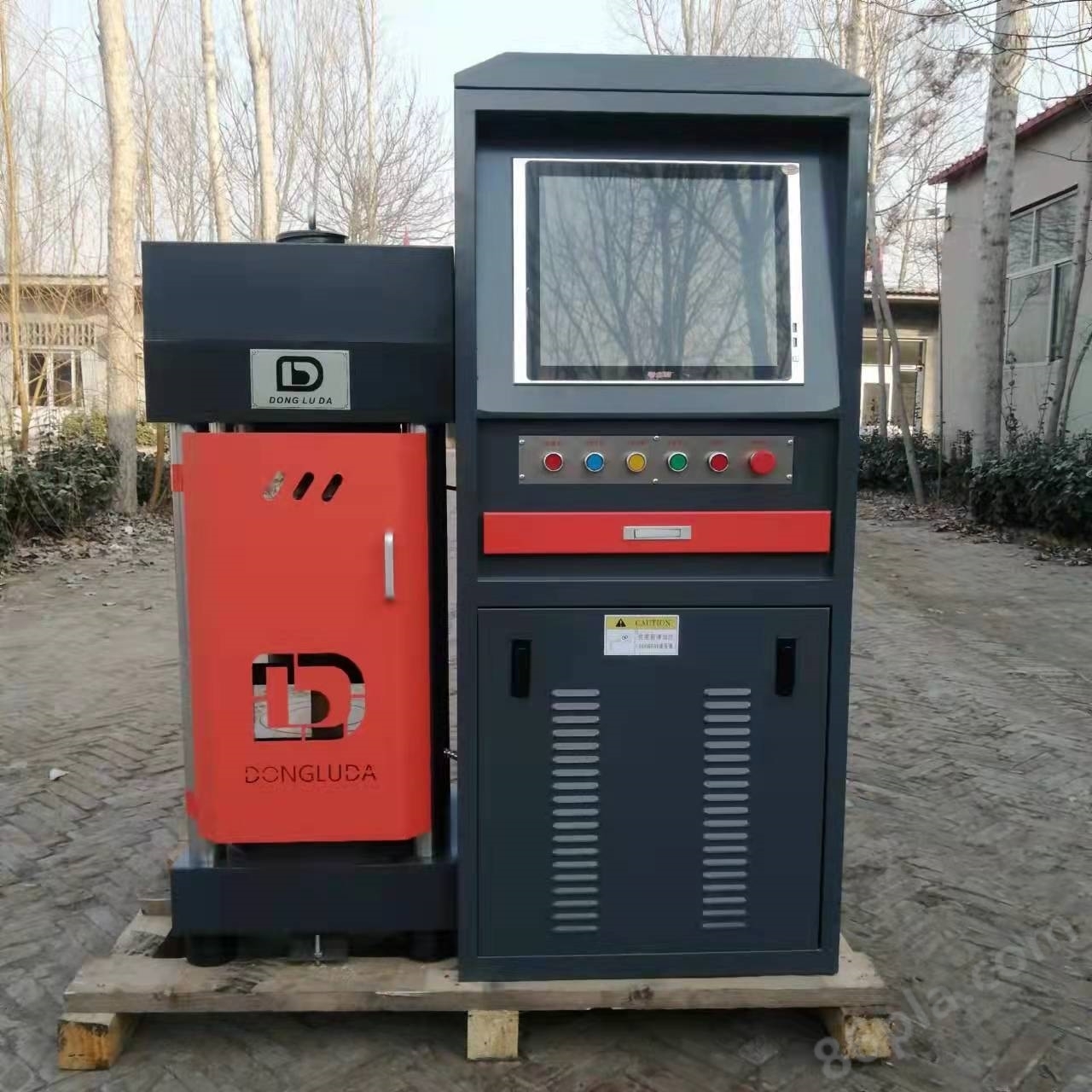
Wholesale of 200 ton fully automatic constant stress testing machine for concrete
NegotiableUpdate on 01/17
- Model
- Nature of the Manufacturer
- Producers
- Product Category
- Place of Origin
Overview
1、 The main use of Hebei concrete constant stress testing machine (electric screw) is to measure the compressive strength of building materials such as bricks, stones, and concrete. This testing machine complies with the national standard "Standard for Test Methods of Mechanical Properties of Ordinary Concrete", and should have computer-controlled loading speed. It also has loading speed indicator device, peak holding, overload protection function, and is a testing and inspection equipment for construction, building materials, highway bridges and other engineering units.
Product Details
1、 The main use of Hebei concrete constant stress testing machine (electric screw) is to measure the compressive strength of building materials such as bricks, stones, and concrete. This testing machine complies with the national standard "Standard for Test Methods of Mechanical Properties of Ordinary Concrete", and should have computer-controlled loading speed. It also has loading speed indicator device, peak holding, overload protection function, and is a testing and inspection equipment for construction, building materials, highway bridges and other engineering units.

1main purpose
Concrete constant stress testing machine (electric screw)Used to determine the compressive strength of building materials such as bricks, stones, and concreteDegree.
This testing machine complies with the national standard "Standard for Test Methods of Mechanical Properties of Ordinary Concrete", and should be computer-controlled for loading speed. It also has loading speed indicator device, peak holding, overload protection function, and is used in construction, building materials, highway bridges and other engineering unitsThe experimental testing equipment.
IIMain technical parameters
1Load capacity: 2000KN
2Accuracy of indication: Level 1
3Minimum resolution value:0.1KN
4Distance between pressure plates:320mm
5Specification of upper and lower pressure plates:220×250mm
6Piston diameter*trip:diameter250×40㎜
7Motor power:0.75KW
8Input voltage:380V
9External dimensions:880×480×1400㎜
10Net weight:850kg
3、 Structure Introduction
Concrete constant stress testing machine (electric screw)It consists of three parts: the main organism, solenoid valve, and computer control panel.
1body part
The testing machine body is connected to the cylinder body and upper beam by four columns
There is an adjusting screw installed on the upper crossbeam of the testing machine. The large hand wheel and nut screw can adjust the no-load height of the testing machine. The lower end of the screw is equipped with a ball seat and an upper pressure plate. The lower pressure plate is placed on the piston of the oil cylinder. When the specimen comes into contact with the upper pressure plate, the upper pressure plate seat can self adjust and balance, keeping the specimen horizontal with the upper and lower pressure plates. The lower pressure plate is engraved with a marking line for locating the test piece. When conducting the test, the test piece should be aligned with the marking line. A dust cover is installed under the lower pressure plate to prevent or reduce dust from entering the oil cylinder and damaging the cylinder body or oil seal during piston lifting. There is a sealing device between the piston and the oil cylinder to prevent oil leakage. However, when there is still a trace of oil leakage from the piston during use, there is a circular oil groove at the top of the cylinder body and a drainage channel to discharge it back to the large oil tank.
2Hydraulic control part
The control box of this testing machine mainly consists of an oil tank, an oil pump, an oil filter, an electric motor, an electromagnetic valve, etc. The oil pump is a direct rotating axial five column pump. The safety valve of the testing machine has been adjusted to the appropriate position at the factory, and the user cannot adjust the safety valve during normal use.
3The program section is equipped with a CD.
4、 Installation of testing machine
1When lifting the testing machine, thread the lifting wire into the lifting ring screw at the top of the screw rod.
2The testing machine is installed at a height of about above the ground20On a stable foundation of centimeters, it should be pre embedded2onlyM12The dimensions of the anchor bolts are shown in Figure 1 of the foundation drawing.
3Used during the installation of the testing machine1/1000Measure with a frame level
The board is in a horizontal state. If it is not horizontal, it can be adjusted with cushion blocks (cushion iron is placed under the nut under the column), and then the testing machine is fastened to the foundation.

5、 Operation steps
1Clean the fuel inlet46#Add anti-wear hydraulic oil to the oil tank until the liquid level shown in Figure 2 is reached.
2Connect the power supply to start the motor (power supply voltage)380V 50Hz)
3Close the return valve and turn the speed valve counterclockwise to supply oil, causing the piston to lift away from the cylinder bottom.
4Place the test piece in place, adjust the height of the screw rod, and adjust the distance between the test piece and the upper pressure plate to be free1-2mmHere.
5When the specimen has not yet come into contact with the upper pressure plate, the adjustable speed valve can quickly rise. After the specimen comes into contact with the upper pressure plate, adjust the speed valve appropriately according to the loading speed to load until the specimen is crushed.
6After the specimen is broken, open the return valve to make the piston fall back. After removing the broken specimen, close the return valve for the next test. When opening the return valve, be sure to slow down the speed
Similar Product Recommend