-
E-mail
kindlift@163.com
-
Phone
13671771943
-
Address
398 Shengang Road, Shanghai
Product Categories
Qianli (Shanghai) Intelligent System Equipment Co., Ltd
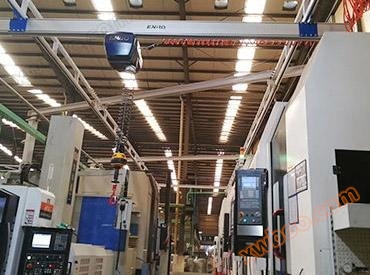
Track lifting
NegotiableUpdate on 10/18
- Model
- Nature of the Manufacturer
- Producers
- Product Category
- Place of Origin
Overview
Rail crane refers to a revolving crane that travels along a track laid on the ground and needs to be disassembled and reinstalled when transferring work sites. The large car track of the crane must be fixed on the travel beam, and the small car track must be fixed on the main beam. When the crane is in operation, the track cannot move horizontally or vertically, and the track should be easy to adjust. ...
Product Details
Rail mounted crane refers to a revolving crane that travels along a track laid on the ground and needs to be dismantled and reinstalled when transferring work sites.
The large car track of the crane must be fixed on the travel beam, and the small car track must be fixed on the main beam. When the crane is in operation, the track cannot move horizontally or vertically, and the track should be easy to adjust.
Crane rails include dedicated rails, railway rails, square rails, and P-type rails; Square rails cause significant wear on the wheels and are now rarely used; The vast majority of crane trucks use P-type rails.
1. Track safety inspection: Check the track, bolts, and clamps for cracks, looseness, and corrosion. If cracks are found, they should be replaced in a timely manner, and if there are other defects, they should be repaired in a timely manner. The main inspection tool is the line track flaw detector.
2. Measurement and adjustment of orbit:
(1) The straightness of the track can be checked by pulling a steel wire, that is, pulling a 0.5mm steel wire on the two ends of the track on the car stop, and then using a plumb bob to measure point by point, with an interval of about 2m between measuring points.
(2) The elevation of the track can be measured with a level.
(3) The span of the track can be checked using a steel tape measure or an infrared measuring instrument. The allowable deviation for the track gauge of the bridge crane is ± 5mm; the longitudinal inclination of the track is 1/1500, and the allowable deviation for the relative elevation of the two tracks is 10mm.
(4) The joint of the track can be made into a direct head or a 45 ° angled diagonal joint. A diagonal joint can ensure a smooth transition of the wheel at the joint. The gap of a general joint is 1-2mm, and in cold regions, the influence of temperature on the gap should be considered, usually 4-6mm. The height difference between the two tracks at the joint should not exceed 1mm.