-
E-mail
shanghaimaoyu@126.com
-
Phone
17821391226
-
Address
No. 88-6 Qi'an Road, Putuo District, Shanghai
Product Categories
- Experimental apparatus for chemical engineering principles
- Electrical and Electronic Training Equipment
- Gas engineering experimental device
- Industrial Automation Training Equipment
- Chemical Engineering Training Equipment
- Maintenance electrician training device
- Agricultural machinery teaching equipment
- Environmental Engineering Laboratory Equipment
- Environmental Engineering Training Equipment
- New energy teaching equipment
- Mechanical simulation comprehensive experimental equipment
Shanghai Maoyu Science and Education Equipment Co., Ltd
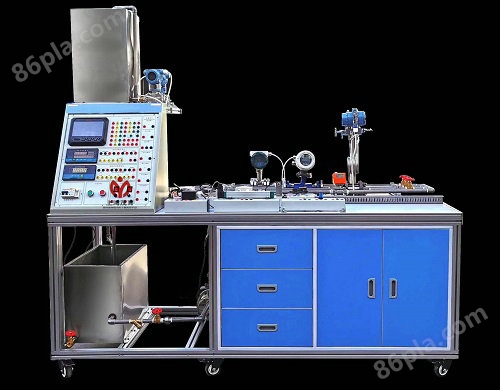
Thermal automation instrument training device
NegotiableUpdate on 01/17
- Model
- Nature of the Manufacturer
- Producers
- Product Category
- Place of Origin
Overview
MYR-53 Thermal Automation Instrument Training Device I. Product Overview: The design of the thermal automation instrument training device, thermal automation instrument training equipment, and thermal automation instrument training platform combines the requirements of the current training syllabi for courses such as "Chemical Measurement and Instrumentation", "Detection Technology and Instrumentation", "Thermal Automation and Instrumentation", "Non electric Measurement and Control Technology", "Process Control", etc. in colleges and universities
Product Details
MYR-53 Thermal Automation Instrument Training Device

1、 Product Overview:
Thermal automation instrument training device, thermal automation instrument training equipment, thermal automation instrument training platformThe design combines the requirements of practical training outlines for courses such as "Chemical Measurement and Instrumentation", "Detection Technology and Instrumentation", "Thermal Automation and Instrumentation", "Non electric Measurement and Control Technology", and "Process Control" in current colleges and universities. Through the use and learning of this training device, students can master the basic knowledge of chemical instruments and automation, have a certain understanding of the installation, debugging, and use of relevant instruments, and have a basic understanding of how to automate the control of parameters such as liquid level, temperature, pressure, and flow rate in chemical production.
two、function:
1. Demonstrate the composition and types of measuring instruments, understand the basic concepts of measurement and measurement errors, general methods of measurement, representation methods and error handling methods, as well as technical indicators for evaluating the quality of measuring instruments. The key is the basic composition and functions of thermal instruments. The sensing element is directly connected to the measured object, sensing changes in the measured parameters, and converting the measured parameter signal into a corresponding signal output that is convenient for measurement and display. Middleware directly transmits the signal output by the sensor to the display device or amplifies and converts it into a signal that adapts to the display element. The display reflects the magnitude and changes of the measured parameter to the observer.
2. During the use of the instrument, all instruments adopt high-precision instruments, which can independently achieve separate adjustment settings for P, I, and D, with accurate flow rate,
three、Technical Specifications:
1. Working power supply: single-phase AC 220V ± 10% 50HZ
2. Working environment: The temperature range is -5 to+40 ℃, with a relative humidity of less than 85% (25 ℃) and an altitude of less than 4000m
3. Device capacity:<3kVA
4. Measurement data: pressure, temperature, flow rate, liquid level measuring instruments.
5. Dimensions: 2000 × 800 × 1600mm
6. Frame material: 4040 aluminum structure
3、 Devicecompose:
The measurement system consists of four basic components: sensors, converters or transmitters, transmission channels, and display devices.
1. The main rest frame adopts 4040 aluminum structure, and the desktop adopts European standard 2080 aluminum panel. The diversion channel on the panel can release the water that flows out during the training process Overall use of blue and white color combination
2. The upper water tank is made of stainless steel and equipped with a scale water level machine, a height water level sensor, and a water level pressure sensor. A full overflow port is designed on the water tank. When the water tank is full during the training process, the water will automatically flow out and then enter the circulating water tank.
3. Pipeline system: using stainless steel pipes, threaded connections, and fixed with specialized metal pipe clamps. Orifice flow meters, electromagnetic flow meters, turbine flow meters, proportional integral control valves, and pressure sensors are installed in advance on the pipeline.
4. The sensor is fixed on the table panel, which can be visually observed and folded. It can be directly inserted with an A1 connecting wire, set the parameters on the input instrument, and directly read the parameter values
5. Paperless recording instrument, color 7-inch 6-channel input, 4-20mA, pt100, 0-50V, 0-10V, 0-10MA, cu50, E thermocouple, K thermocouple and most mainstream sensors and transmitters in the market, temperature resistance.
6. Proportional control valve: 4-20mA input, 4-20mA output,+24V safe voltage, standard 485 communication protocol is standard on the equipment
7. Control instruments: During use, all instruments use high-precision instruments that can independently adjust the settings of P, I, and D separately. The flow rate is accurate and the input and output are 4-20mA
8. All instrument devices come standard with 485 communication protocol, which facilitates secondary development for students
9. Orifice flowmeter, equipped with a three plate valve group, can independently demonstrate the use of orifice flowmeter.
10. The water system adopts a direct insertion structure for water pipe joints, which is easy to remove and connect, and adopts a differential connection method.
4feature:
1. The system describes 17 commonly used sensors, including Hall displacement sensors, Hall speed sensors, piezoelectric sensors, humidity sensors, gas sensors, eddy current sensors, magneto electric sensors, differential capacitance sensors, differential transformers, metal foil strain sensors, diffused silicon pressure sensors, fiber optic displacement sensors, photoelectric speed sensors, integrated temperature sensors, K-type thermocouples, E-type thermocouples, PT100 platinum resistors, etc., through four aspects: product description, parts display, assembly demonstration, and principle display.
2. Parts display: Display each component of the sensor separately, observe the structure, material, and material type of the parts.
3. Assembly demonstration: Present the assembly process of the sensor in a realistic form, allowing students to intuitively understand the composition and structure of the sensor
4. Assembly method. It has functions such as fast assembly, instrument password input, and adjusting manufacturer coefficients.
5. Principle demonstration: Through specific application examples such as displacement measurement, vibration measurement, speed measurement, and environmental measurement, the basic principles of sensors are demonstrated, and experimental results can be dynamically displayed to deepen students' understanding of sensors.
6. The values read by sensors can be corrected on the instrument, and the factory password can be used to enter the instrument system and modify the factory values of the instrument.
fiveTraining function
1. Can achieve sensor recognition;
2. Ability to understand the working principle and characteristics of centrifugal pumps;
3. Understanding the working principle and characteristics of electric control valves
4. Ability to recognize and use intelligent regulators
5. Can realize the understanding and use of flow integrator
6. Ability to recognize and use paperless recorders
7. Understanding and verifying the working principle of turbine flow meters
8. Understanding and verifying the working principle of electromagnetic flow meters
9. Understanding and verifying the working principle of orifice flow meters
10. Understanding and using the working principle of differential pressure transmitters
11. Understanding and operating the working principle of diffusion silicon pressure sensors
12. Understanding and Verification of the Working Principle of Diffuse Silicon Liquid Level Sensor
13. Understanding and Verification of the Working Principle of Capacitive Liquid Level Sensors
14. Understanding and Verification of the Working Principle of Differential Pressure Liquid Level Sensors
15. Understanding the Working Principle of Pt100 Platinum Thermistor
16. Understanding the working principle of achieving a balanced bridge
17. Understanding the working principle of T-shaped thermocouples
18. Understanding the Working Principle of Semiconductor Thermistors
19. Understanding the Zero Point and Migration of Sensors
20. Principle of PID regulation experiment
Thermal automation instrument training device, thermal automation instrument training equipment, thermal automation instrument training platformThe design combines the requirements of practical training outlines for courses such as "Chemical Measurement and Instrumentation", "Detection Technology and Instrumentation", "Thermal Automation and Instrumentation", "Non electric Measurement and Control Technology", and "Process Control" in current colleges and universities. Through the use and learning of this training device, students can master the basic knowledge of chemical instruments and automation, have a certain understanding of the installation, debugging, and use of relevant instruments, and have a basic understanding of how to automate the control of parameters such as liquid level, temperature, pressure, and flow rate in chemical production.
two、function:
1. Demonstrate the composition and types of measuring instruments, understand the basic concepts of measurement and measurement errors, general methods of measurement, representation methods and error handling methods, as well as technical indicators for evaluating the quality of measuring instruments. The key is the basic composition and functions of thermal instruments. The sensing element is directly connected to the measured object, sensing changes in the measured parameters, and converting the measured parameter signal into a corresponding signal output that is convenient for measurement and display. Middleware directly transmits the signal output by the sensor to the display device or amplifies and converts it into a signal that adapts to the display element. The display reflects the magnitude and changes of the measured parameter to the observer.
2. During the use of the instrument, all instruments adopt high-precision instruments, which can independently achieve separate adjustment settings for P, I, and D, with accurate flow rate,
three、Technical Specifications:
1. Working power supply: single-phase AC 220V ± 10% 50HZ
2. Working environment: The temperature range is -5 to+40 ℃, with a relative humidity of less than 85% (25 ℃) and an altitude of less than 4000m
3. Device capacity:<3kVA
4. Measurement data: pressure, temperature, flow rate, liquid level measuring instruments.
5. Dimensions: 2000 × 800 × 1600mm
6. Frame material: 4040 aluminum structure
3、 Devicecompose:
The measurement system consists of four basic components: sensors, converters or transmitters, transmission channels, and display devices.
1. The main rest frame adopts 4040 aluminum structure, and the desktop adopts European standard 2080 aluminum panel. The diversion channel on the panel can release the water that flows out during the training process Overall use of blue and white color combination
2. The upper water tank is made of stainless steel and equipped with a scale water level machine, a height water level sensor, and a water level pressure sensor. A full overflow port is designed on the water tank. When the water tank is full during the training process, the water will automatically flow out and then enter the circulating water tank.
3. Pipeline system: using stainless steel pipes, threaded connections, and fixed with specialized metal pipe clamps. Orifice flow meters, electromagnetic flow meters, turbine flow meters, proportional integral control valves, and pressure sensors are installed in advance on the pipeline.
4. The sensor is fixed on the table panel, which can be visually observed and folded. It can be directly inserted with an A1 connecting wire, set the parameters on the input instrument, and directly read the parameter values
5. Paperless recording instrument, color 7-inch 6-channel input, 4-20mA, pt100, 0-50V, 0-10V, 0-10MA, cu50, E thermocouple, K thermocouple and most mainstream sensors and transmitters in the market, temperature resistance.
6. Proportional control valve: 4-20mA input, 4-20mA output,+24V safe voltage, standard 485 communication protocol is standard on the equipment
7. Control instruments: During use, all instruments use high-precision instruments that can independently adjust the settings of P, I, and D separately. The flow rate is accurate and the input and output are 4-20mA
8. All instrument devices come standard with 485 communication protocol, which facilitates secondary development for students
9. Orifice flowmeter, equipped with a three plate valve group, can independently demonstrate the use of orifice flowmeter.
10. The water system adopts a direct insertion structure for water pipe joints, which is easy to remove and connect, and adopts a differential connection method.
4feature:
1. The system describes 17 commonly used sensors, including Hall displacement sensors, Hall speed sensors, piezoelectric sensors, humidity sensors, gas sensors, eddy current sensors, magneto electric sensors, differential capacitance sensors, differential transformers, metal foil strain sensors, diffused silicon pressure sensors, fiber optic displacement sensors, photoelectric speed sensors, integrated temperature sensors, K-type thermocouples, E-type thermocouples, PT100 platinum resistors, etc., through four aspects: product description, parts display, assembly demonstration, and principle display.
2. Parts display: Display each component of the sensor separately, observe the structure, material, and material type of the parts.
3. Assembly demonstration: Present the assembly process of the sensor in a realistic form, allowing students to intuitively understand the composition and structure of the sensor
4. Assembly method. It has functions such as fast assembly, instrument password input, and adjusting manufacturer coefficients.
5. Principle demonstration: Through specific application examples such as displacement measurement, vibration measurement, speed measurement, and environmental measurement, the basic principles of sensors are demonstrated, and experimental results can be dynamically displayed to deepen students' understanding of sensors.
6. The values read by sensors can be corrected on the instrument, and the factory password can be used to enter the instrument system and modify the factory values of the instrument.
fiveTraining function
1. Can achieve sensor recognition;
2. Ability to understand the working principle and characteristics of centrifugal pumps;
3. Understanding the working principle and characteristics of electric control valves
4. Ability to recognize and use intelligent regulators
5. Can realize the understanding and use of flow integrator
6. Ability to recognize and use paperless recorders
7. Understanding and verifying the working principle of turbine flow meters
8. Understanding and verifying the working principle of electromagnetic flow meters
9. Understanding and verifying the working principle of orifice flow meters
10. Understanding and using the working principle of differential pressure transmitters
11. Understanding and operating the working principle of diffusion silicon pressure sensors
12. Understanding and Verification of the Working Principle of Diffuse Silicon Liquid Level Sensor
13. Understanding and Verification of the Working Principle of Capacitive Liquid Level Sensors
14. Understanding and Verification of the Working Principle of Differential Pressure Liquid Level Sensors
15. Understanding the Working Principle of Pt100 Platinum Thermistor
16. Understanding the working principle of achieving a balanced bridge
17. Understanding the working principle of T-shaped thermocouples
18. Understanding the Working Principle of Semiconductor Thermistors
19. Understanding the Zero Point and Migration of Sensors
20. Principle of PID regulation experiment
Friendly reminder:
1. Equipment acceptance: Each purchasing unit shall inspect the appearance of the thermal automation instrument training device upon receipt, verify the quantity and accessories of the equipment, and reject the thermal automation instrument training device in a damaged state;
2. Equipment Warranty: Maoyu will provide each purchasing unit with the warranty conditions and warranty period specified in the instruction manual for the thermal automation instrument training device. Within the warranty scope, free maintenance of the device will be provided. If the conditions are exceeded, paid maintenance of the thermal automation instrument training device will be provided;
3. Equipment return and exchange: Requests for return and exchange of thermal automation instrument training devices caused by unilateral reasons of each purchasing unit, resulting in incorrect selection or purchase of equipment quantity, will not be accepted;
4. Equipment delivery time: The delivery time of the thermal automation instrument training device is a reference value. If you need to know the accurate delivery time of the thermal automation instrument training device, please contact the sales personnel of Shanghai Maoyu;
5. If any purchasing units have any questions about the thermal automation instrument training device, please call:, and we will have professional technical personnel provide you with technical consultation on the thermal automation instrument training device.
1. Equipment acceptance: Each purchasing unit shall inspect the appearance of the thermal automation instrument training device upon receipt, verify the quantity and accessories of the equipment, and reject the thermal automation instrument training device in a damaged state;
2. Equipment Warranty: Maoyu will provide each purchasing unit with the warranty conditions and warranty period specified in the instruction manual for the thermal automation instrument training device. Within the warranty scope, free maintenance of the device will be provided. If the conditions are exceeded, paid maintenance of the thermal automation instrument training device will be provided;
3. Equipment return and exchange: Requests for return and exchange of thermal automation instrument training devices caused by unilateral reasons of each purchasing unit, resulting in incorrect selection or purchase of equipment quantity, will not be accepted;
4. Equipment delivery time: The delivery time of the thermal automation instrument training device is a reference value. If you need to know the accurate delivery time of the thermal automation instrument training device, please contact the sales personnel of Shanghai Maoyu;
5. If any purchasing units have any questions about the thermal automation instrument training device, please call:, and we will have professional technical personnel provide you with technical consultation on the thermal automation instrument training device.
Can't find the product you're looking for? Please click on the product display
Similar Product Recommend