-
E-mail
info@chaojiesuji.com
-
Phone
1396422027713964292356
-
Address
Mucheng Industrial Park, Licha Town, Jiaozhou City, Qingdao City, Shandong Province
Product Categories
Qingdao Chaojie Plastic Machinery Co., Ltd
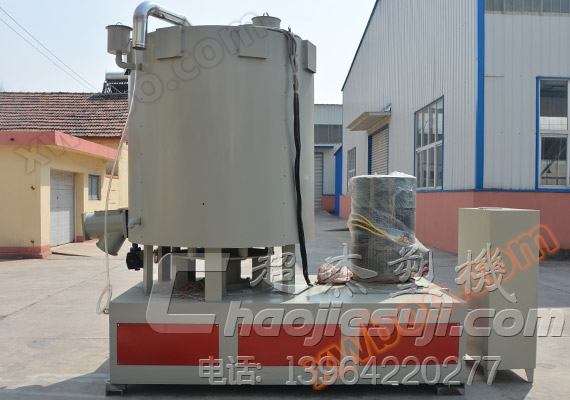
SHR1300 modified mixer
NegotiableUpdate on 10/01
- Model
- Nature of the Manufacturer
- Producers
- Product Category
- Place of Origin
Overview
SHR-1300 Modified Mixer I. High speed Mixer Purpose: The SHR series high-speed mixing unit is mainly suitable for mixing, stirring, coloring, drying various resins such as polyethylene, polypropylene, polyvinyl chloride, etc., as well as drying, devolatilization and other processes before the molding and processing of engineering plastics such as ABS polycarbonate. It can also be used for mixing phenolic resins
Product Details
SHR-1300 modified mixer
1、 Application of high-speed mixer:
The SHR series high-speed mixing unit is mainly suitable for mixing, stirring, coloring, drying various resins such as polyethylene, polypropylene, polyvinyl chloride, etc., as well as drying, devolatilization and other processes before the molding and processing of engineering plastics such as ABS polycarbonate. It can also be used for mixing phenolic resins.
2、 Main performance and specifications of high-speed mixer
Hot mixing section:
Total volume: 1300 liters
Effective volume: 975 liters
Mixing slurry quantity: 3 pieces
Mixing speed: 325/650 revolutions per minute
Heating method: electric heating/self friction
Mixing time: 10-15 minutes per pot
Voltage: 380 volts
Electric motor: YD250V-8/4
Power: 110kw single speed variable frequency 110kw
Vertical electrical control box: 1 unit
Air source used: Compressed air 0.39-0.49 megapascals
Hot mix size: (length x width x height) 2600 x 1400 x 2560mm
3、 Characteristics of high-speed mixer:
1. Used for various material mixing, stirring, drying, coloring and other processes in industries such as plastics, rubber, and daily chemical products.
2. The spindle seal adopts a special material seal and an oil resistant and high-temperature resistant skeleton oil seal.
3. The pot lid adopts double sealing.
4. Equipped with various heating methods such as self friction and electric heating.
5. The unloading method adopts two types: temperature automatic control and manual control.
6. The blade is made of integral stainless steel casting and refined through dynamic and static balance.
7. Electrical control uses control components.
4、 Structural description of high-speed mixer:
The hot mixing part consists of a pot body, a pot cover, transmission components, a base, a discharge port, and other parts. The pot body is welded from stainless steel, with a smooth and hard interior that is wear-resistant, corrosion-resistant, and not easily stained. The exterior of the pot indicates the presence of a heating jacket and a resistance heating coil. The temperature is transmitted to the pot body through the high ignition point mechanical oil in the heating jacket, ensuring even heating of the pot body. Adjusting the heating temperature can control the temperature of the materials in the pot. The jacket has an asbestos insulation layer on the outer surface.
The pot lid is made of aluminum alloy casting, and the inside indicates that it has been precision machined and polished. It is lifted by a cylinder to lift the lid of the pot, and can rotate horizontally clockwise along the vertical axis by 70 ℃, which is light and easy to use. Do not apply excessive force during rotation to avoid damaging the pot wall. The lid has holes for adding resin, speed increasing agent, and stabilizer, which users can arrange according to their own needs. The center is a breathable hole to prevent personal accidents caused by the rotation of the mixing slurry when the lid is not properly covered. The lid valve and motor are interlocked, and when the lid valve is working, the switch is not connected and the motor cannot start. When the motor is working, the lid valve cannot be opened.
The deflector is used to enhance the mixing effect. There is a temperature measuring thermocouple installed inside the board, and the material temperature can be reflected and read on the indicator. It is also used to automatically control the automatic discharge of the discharge port.
The mixing slurry of the mixer is driven by a motor through the skin, and the motor is an AC dual speed motor. As long as the low and high speed buttons are pressed, low and high speeds can be achieved. However, it must be noted that in order to operate at high speed, the motor should be started at low speed first, and then the main shaft should be carried and rotated by the bearings during high-speed operation. There are three mixing slurries on the upper part of the main shaft, which rotate clockwise to make the material move along the pot wall while also circulating up and down. With the help of a guide plate, the mixing effect is better. Due to the high-speed movement of materials, there is a significant amount of frictional heat between particles and between materials and slurry, which causes a rapid increase in material temperature. Not only does it correspondingly reduce the heating amount of the pot wall, but it also facilitates the absorption effect of the resin on the accelerator. The mixing slurry is made of stainless steel and carefully machined to be wear-resistant and corrosion-resistant.
The pot body is welded from stainless steel, and the inner wall is extremely smooth and hard, with characteristics such as wear resistance, corrosion resistance, and non stick material.
The transmission part is driven by a starter motor through a triangular pulley to drive the reducer, which inputs power to the main shaft to rotate the mixing slurry and fully mix the hot mixed materials.
The base is welded from steel plates and angle steels, equipped with adjustable bolts to adjust the tension of the transmission triangle belt, and fixed to the machine base with foot screws at the bottom.
The discharge part is made of aluminum alloy casting. Equipped with a startup discharge door. The cylinder is directly connected to the material door in a linear manner, with reliable compression, good sealing, and flexible opening and closing. A 0.39-0.49Mpa air compressor is used (optional by the user), and the unloading method can be controlled by automatic temperature control of the material in the pot or manual operation with a button to control the opening and closing of the unloading door.
5、 Instructions for using high-speed mixer:
1. The mixer and the electrical control box are installed separately on the cement foundation and fixed with anchor bolts.
2. Before testing the machine, it is necessary to carefully check whether the power supply, gas source, and other components connected are consistent with the requirements of the machine. All components should be installed completely, and the circuits connected during installation should be checked according to the circuit diagram to ensure that there are no errors. Each lubrication point should be filled with designated lubricating oil (grease), and the anti rust grease in all parts of the machine should be wiped clean.
3. The mixer should start from low-speed to no-load starting, then perform high-speed no-load operation, and check whether the pneumatic part of the pot cover is normal and whether the discharge door is closed properly. After trial operation, it can be put into use.
4. After using the machine, if it is not used for a short period of time, the remaining materials on the inner wall of the pot and the stirring blade should be carefully wiped clean. If it is not used for a long time, anti rust oil should be applied.
5. The lubrication requirements are as follows: the main shaft, rolling bearings, and oil seals of the mixer should be lubricated with No. 4 sodium based grease (GB492) and refilled once a day; Full machine maintenance should be carried out every six months, including replacement of seals and inspection of circuit circuits and components.
Note: This machine is not allowed to start with load or frequently. It should be started at low speed first and then at high speed before feeding, and the discharge should not be stopped.
Main technical parameters of high-speed mixer:
Model: SHR-5A Total volume (L): 5 Effective volume (L): 3 Motor power (kw): 2.2 Spindle speed (rpm): 600-3000 Heating method: Self friction Unloading method: Manual
Model: SHR-10A Total volume (L): 10 Effective volume (L): 7 Motor power (kw): 3 Spindle speed (rpm): 600-3000 Heating method: Self friction Unloading method: Manual
Model: SHR-50A Total Capacity (L): 50 Effective Capacity (L): 35 Motor Power (kw): 7/11 Spindle Speed (rpm): 750/1500 Heating Method: Electric/Self Friction Unloading Method: Automatic
Model: SHR-100A Total Capacity (L): 100 Effective Capacity (L): 75 Motor Power (kw): 14/22 Spindle Speed (rpm): 650/1300 Heating Method: Electric/Self Friction Unloading Method: Automatic
Model: SHR-200A Total Capacity (L): 200 Effective Capacity (L): 150 Motor Power (kw): 30/42 Spindle Speed (rpm): 475/950 Heating Method: Electric/Self Friction Unloading Method: Automatic
Model: SHR-300A Total Capacity (L): 300 Effective Capacity (L): 225 Motor Power (kw): 40/55 Spindle Speed (rpm): 475/950 Heating Method: Electric/Self Friction Unloading Method: Automatic
Model: SHR-500A Total Capacity (L): 500 Effective Capacity (L): 375 Motor Power (kw): 47/67 Spindle Speed (rpm): 430/860 Heating Method: Electric/Self Friction Unloading Method: Automatic
Model: SHR-800A Total Capacity (L): 800 Effective Capacity (L): 600 Motor Power (kw): 90 Spindle Speed (rpm): 370/740 Heating Method: Electric/Self Friction Unloading Method: Automatic
Model: SHR-1000A Total Capacity (L): 1000 Effective Capacity (L): 750 Motor Power (kw): 110 Spindle Speed (rpm): 325/650 Heating Method: Electric/Self Friction Unloading Method: Automatic
Similar Product Recommend