-
E-mail
972496659@qq.com
-
Phone
18015853030
-
Address
Changzhou, Jiangsu
Product Categories
Jiangsu Nanpai Municipal Construction Engineering Co., Ltd

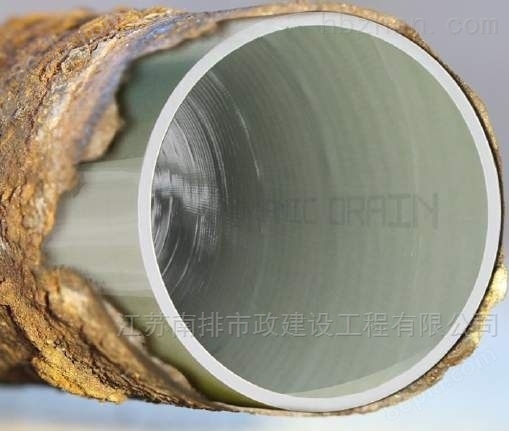
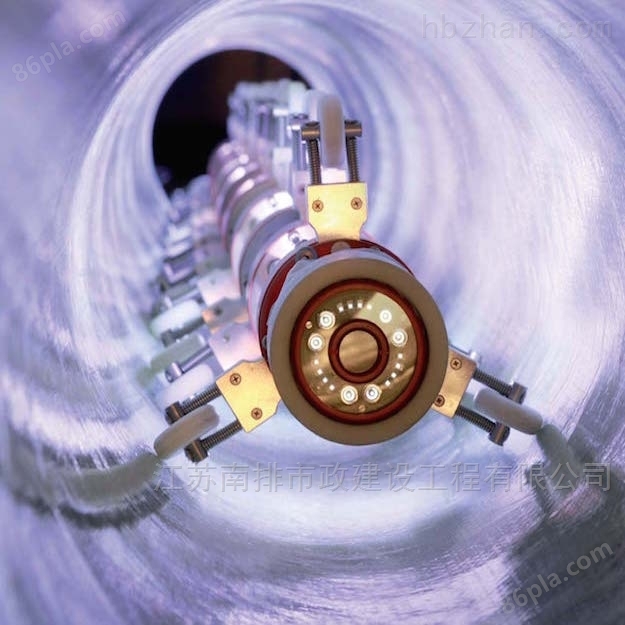
Advantages of non excavation repair for rainwater underground pipelines
NegotiableUpdate on 01/17
- Model
- Nature of the Manufacturer
- Producers
- Product Category
- Place of Origin
Overview
Non excavation repair of underground pipelines plays a role in protecting the environment, saving resources and characteristics, without the need to dig the road surface, and without causing garbage; The repair construction period is short, and the impact on the lives of surrounding residents is relatively small.
Product Details
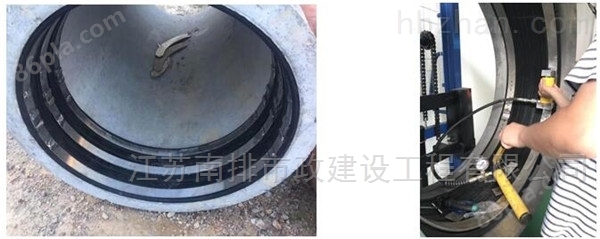
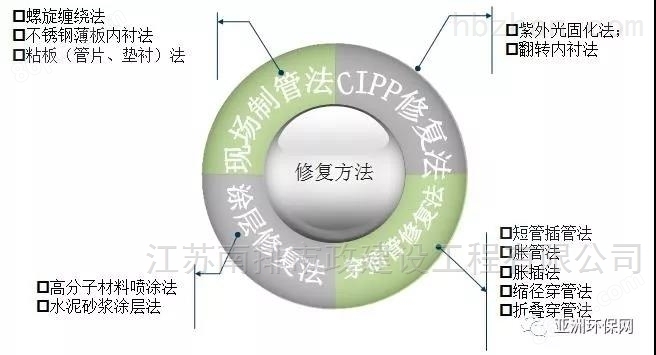
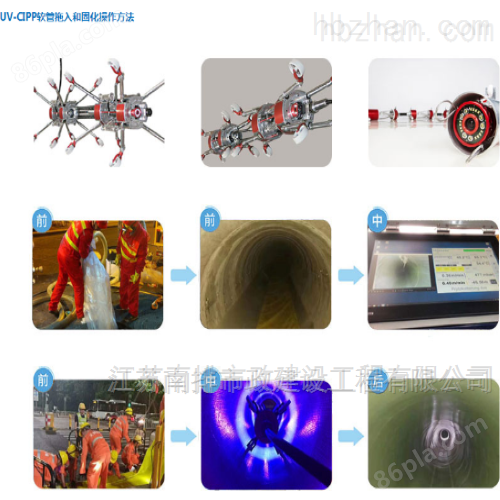
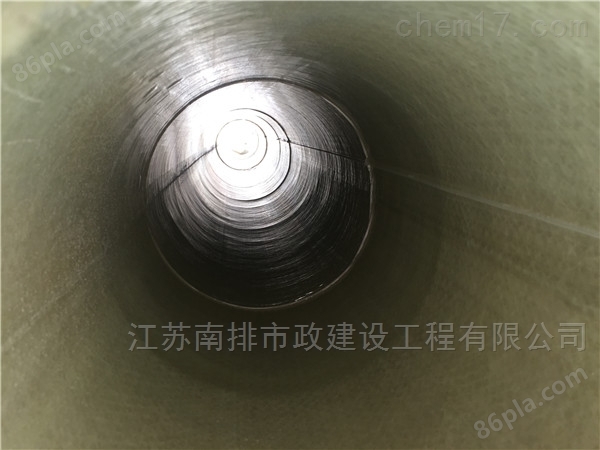
Non excavation repair of underground pipelinesJiangsu Nanpai Municipal Pipeline Non excavation Repair Construction Mobile Service covers the whole country, and construction cases are available in cities of all sizes. It can protect the environment, save resources and characteristics, without the need to dig roads, and will not cause garbage; The repair construction period is short (curing time can reach 1m/s). The impact on the lives of surrounding residents is relatively small. Adhering to the principle of considering the people, Jiangsu Nanpai Municipal Pipeline Non excavation Repair Technology aims to be practical and efficient, using pipeline repair "black technology" to provide convenience for residents. The pipeline non excavation repair company has been established for nearly 6 years since 2014. The UV curing CIPP non digging repair method can produce hoses up to 500m in length, and even if there are changes in the size of a section of the pipeline or if the pipeline has a curvature of less than 30 °, it can be repaired without wrinkles. Flexible hoses are suitable for various types of pipes, including circular, oval, egg shaped, square, etc. The inner lining wall thickness ranges from 3mm to 12mm.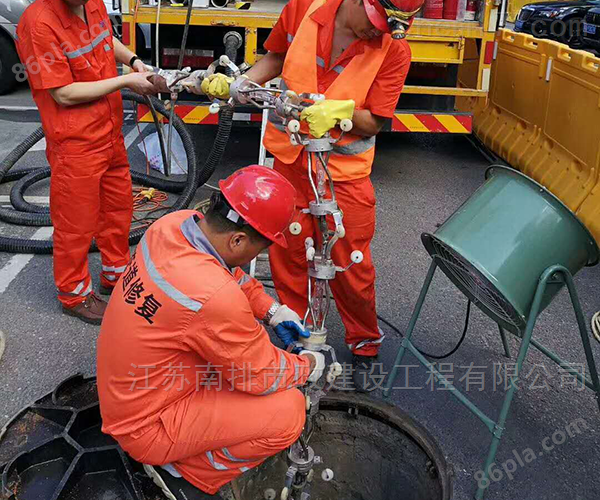
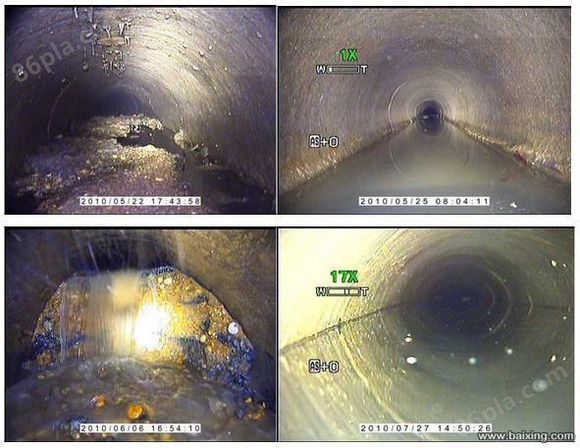
Non excavation repair of underground pipelinesAcceptance Criteria
1. Appearance inspection
After repair
1.1 All lining pipes should undergo an internal visual inspection, and the inspection data should be included in the completion file.
1) Inner lining pipes with an inner diameter of less than or equal to 800mm should be inspected using closed-circuit television, with images as the basis for visual inspection;
2) Inner lining pipes with an inner diameter greater than 800mm should be manually inspected after cooling, and image data should be left at the defect location.
1.2 The appearance inspection results shall comply with the following regulations:
1) No cracks, holes, dry spots, detachment, burn points, weak zones, or visible leakage phenomena;
2) It should be tightly attached to the old pipeline, with smooth inner walls and no obvious circular folds;
3) The number of local uplifts in a well section should not exceed 2, and the height of the uplifts should not exceed 2% of the inner diameter (ball passing method inspection);
4) The end incision should be flat, and there should be no water leakage in the fitting gap;
5) When repairing locally, the defective area should be covered with *.
2. Wall thickness measurement
2.1 All lining pipes should undergo wall thickness measurement, and the measurement records should be included in the completion file.
1) Two ends of each lining tube should be measured, and four evenly distributed measuring points should be selected for each end;
2) It is advisable to use a thickness gauge for measurement; When measuring with a steel caliper, the accuracy should reach 0.1 mm.
2.2 The wall thickness measurement results shall comply with the following regulations:
1) The average wall thickness of any end should not be less than the design wall thickness;
2) The small wall thickness at either end should not be less than 90% of the design wall thickness.
3. X120-UV Portable UV Curing Repair System Curing Parameter Table

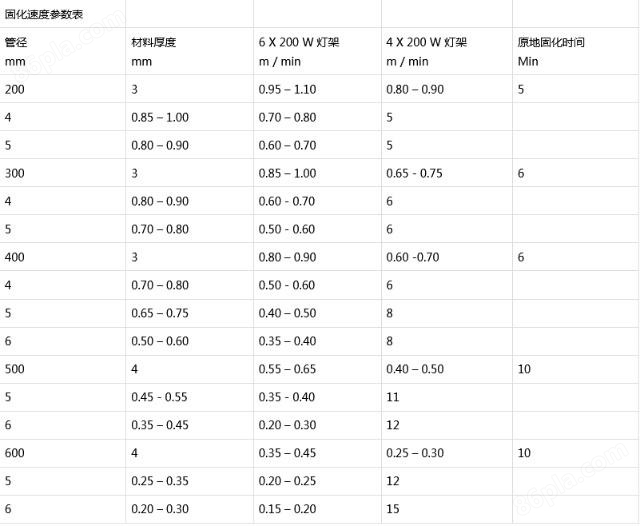
At high speeds, diameter dependent light sources should be used in conjunction with high-performance ultraviolet lamps. The temperature sensor should have complete functions and operate well, and the temperature of the middle lamp holder sensor should reach between 80-130 ℃. If the temperature is less than 80 ℃, the curing speed should be reduced for adjustment.
The suggestions given here are based solely on personal experience. Special construction sites may require lower curing speeds. Therefore, we do not assume any guarantee responsibility for any details. Please adjust the speed according to real-time temperature feedback during construction!
Similar Product Recommend