-
E-mail
1539082550@qq.com
-
Phone
13775206976
-
Address
No. 18, Qinglong Tongjia Industrial Park, Tianning District, Changzhou City
Product Categories
Changzhou Liangbang Instrument Co., Ltd
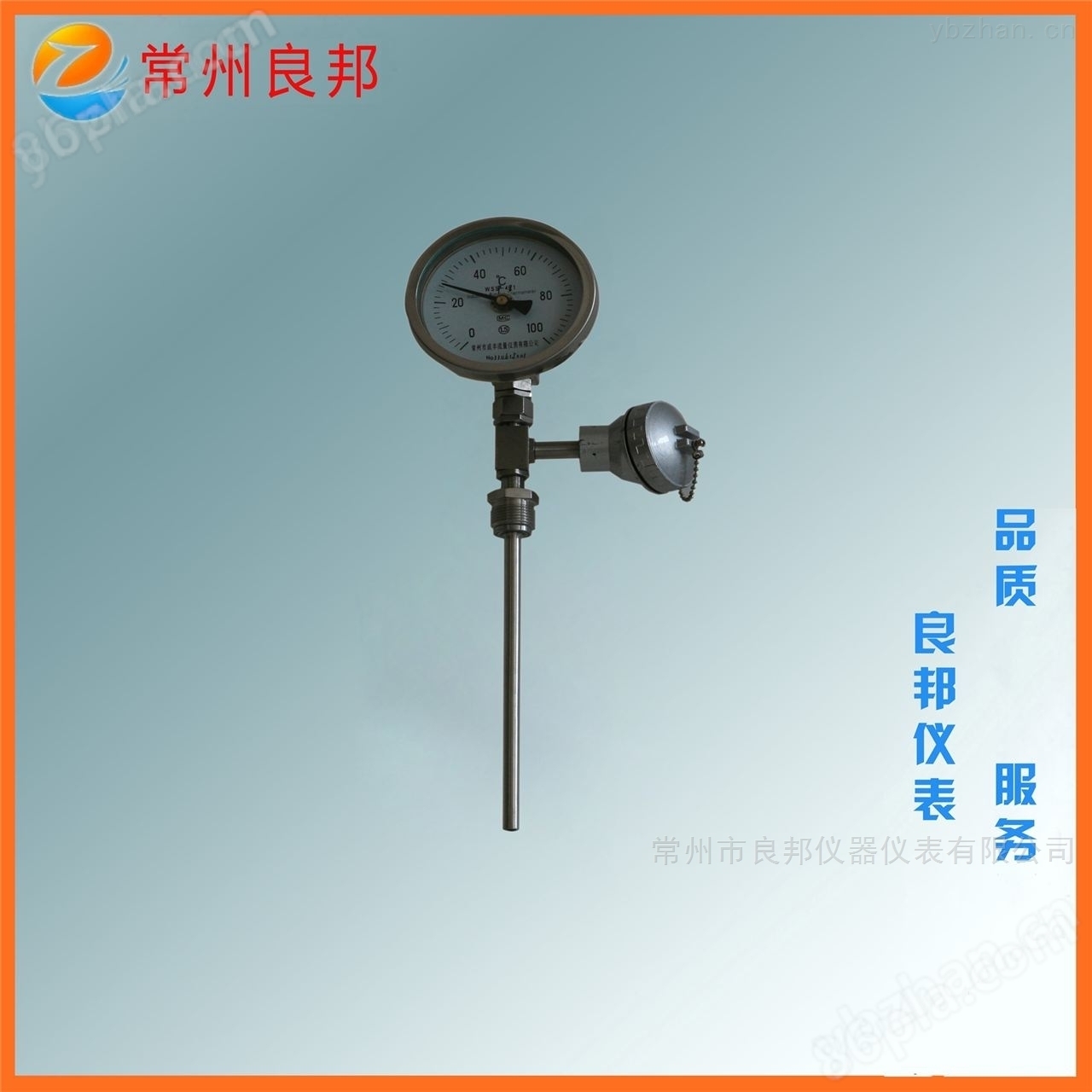
*Industrial stainless steel bimetallic thermometer WSS
NegotiableUpdate on 01/17
- Model
- Nature of the Manufacturer
- Producers
- Product Category
- Place of Origin
Overview
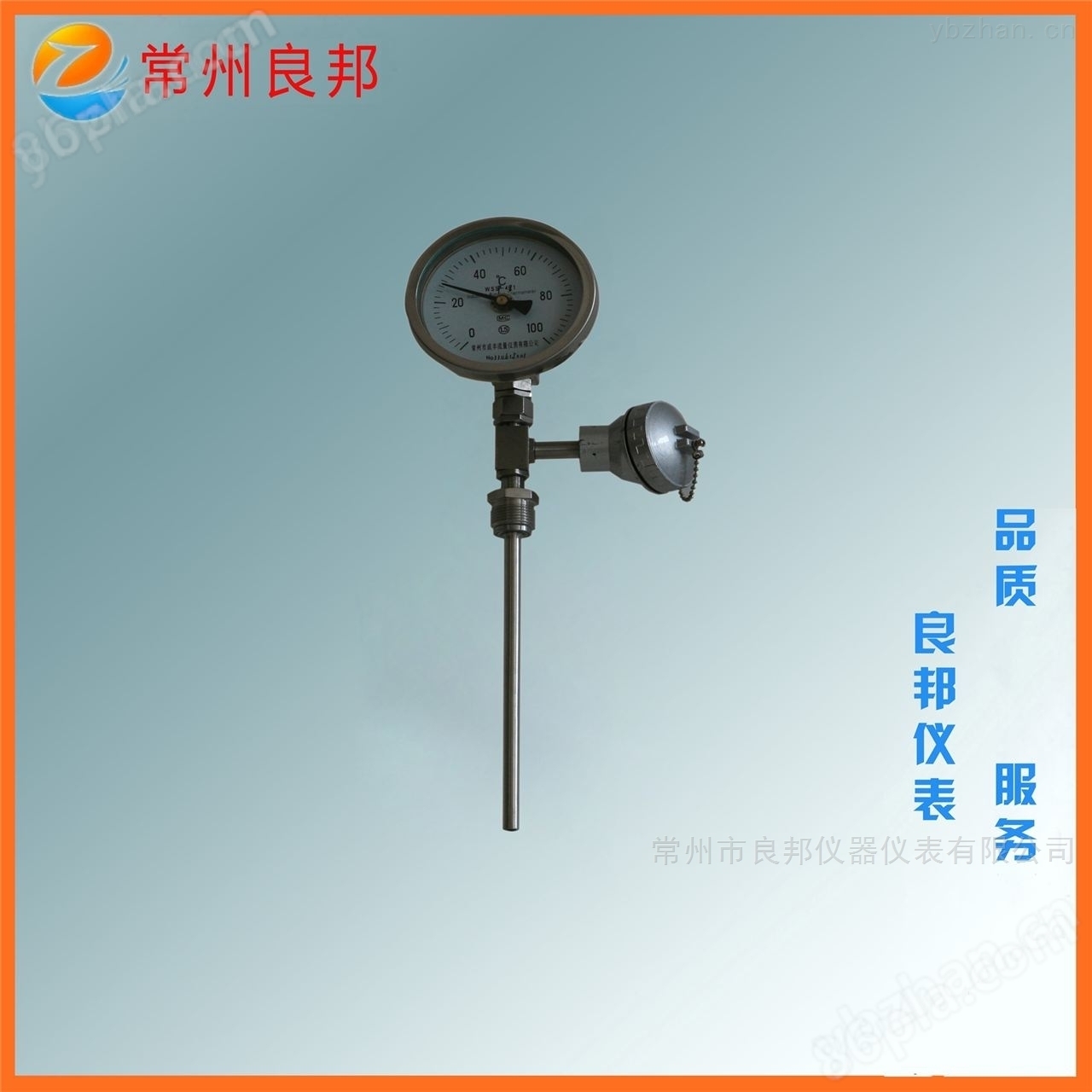
Brief description: The main component of the industrial stainless steel bimetallic thermometer WSS is a multi-layer metal sheet composed of two or more metal sheets stacked together, which works based on the principle that two different metals expand differently when the temperature changes. It is composed of bimetallic sheets wound into a circular curved shape. When one end expands due to heat, it drives the pointer to rotate, and the working instrument displays the temperature value corresponding to the thermoelectric potential.
Product Details
*Industrial stainless steel bimetallic thermometer WSSThe main component is a multi-layer metal sheet composed of two or more metal sheets stacked together, which works based on the principle that two different metals expand differently when the temperature changes. It is composed of bimetallic sheets wound into a circular curved shape. When one end expands due to heat, it drives the pointer to rotate, and the working instrument displays the temperature value corresponding to the thermoelectric potential.
*Industrial stainless steel bimetallic thermometer WSSfeature
Fast response speed, small size, good linearity, and stability. Some foreign products also have high-temperature working performance.
Generally, bimetallic thermometers are used at low temperatures, while thermocouples are used at high temperatures. If the temperature exceeds 500 degrees, the resistance of the bimetallic thermometer will be very high, which may affect the measurement results and even lead to situations where the measurement results cannot be obtained.
The main types of moisture sensing materials are high molecular weight polymers, lithium chloride, and metal oxides. The advantages of bimetallic thermometers are fast response speed, small size, good linearity, and stability. Some foreign products also have high-temperature working performance.
Precautions
When selecting a bimetallic thermometer, full consideration should be given to the actual application environment and requirements, such as dial diameter, accuracy, installation and fixing methods, type of measured medium, and environmental hazards. In addition, it is also important to pay attention to factors such as cost-effectiveness and maintenance workload.
Bimetallic thermometer - Huai'an Senling Instrument. In addition, during transportation, installation, and use, the bimetallic thermometer should avoid colliding with the temperature probe. To ensure measurement accuracy, the length of the probe inserted into the measured medium should not be less than 2/3 of the probe length. It is forbidden to twist the instrument housing during installation.
*Industrial stainless steel bimetallic thermometer WSSmaintenance use
1. During the storage, installation, use, and transportation of WSS series bimetallic thermometers, collision with protective tubes should be avoided as much as possible, and protection should not be used Bending and deformation of the protective tube. During installation, it is strictly prohibited to twist the instrument housing.
2. The instrument should operate normally within an ambient temperature range of -30 ℃ to 80 ℃.
3. The temperature at which the instrument frequently operates can be between 1/2 and 3/4 of the scale range.
4. The length of the bimetallic thermometer protection tube immersed in the measured medium must be greater than the length of the temperature sensing element. Generally, the immersion length is greater than 100mm, and the immersion length for the 0-50 ℃ range is greater than 150mm to ensure measurement accuracy.
5. Various bimetallic thermometers are not suitable for measuring the temperature of media in open containers, and live contact thermometers are not suitable for use in control circuits with high working vibration.
6. During the storage, installation, and transportation of bimetallic thermometers, collision with the protective tube should be avoided, and the protective tube should not be bent or deformed, and the thermometer should not be used as a wrench.
7. The thermometer should be regularly inspected under normal use. It is generally recommended to do so every six months. Electric contact thermometers are not allowed to operate under strong vibrations to avoid affecting the reliability of the contacts.
*Industrial stainless steel bimetallic thermometer WSSTechnical Specifications:
1. Temperature measurement range -40~600 ℃
2. Environmental temperature -10~55 ℃
3. Relative humidity ≤ 95%
4. Accuracy of 1.5
5. Time constant ≤ 60S
6. Probe withstand voltage ≤ 6Mpa
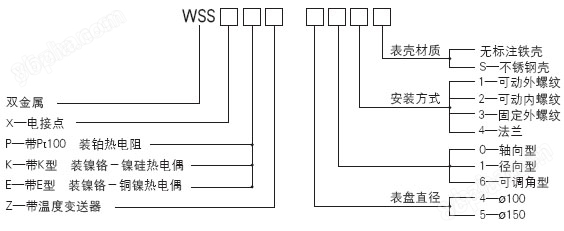
7. Probe diameter: φ 8-10mm, movable external thread: M27 * 2
8. Thermal resistance PT100 (single or dual output) or 4-20mA current output
Similar Product Recommend