Top 10 Polyacrylamide (PAM) Manufacturers in China (2026 Review)
10,30,2026 7 views


11,06,20260From:
China is one of the major sources of polyacrylamide (PAM) for the global market. Chinese suppliers serve a wide range of industries, including municipal and industrial wastewater treatment, mining, pulp and paper manufacturing, and oilfield operations.
For international buyers, however, choosing a suitable PAM supplier is not simply a matter of comparing prices or looking at production capacity. Product consistency, formulation options, application experience, technical support, and delivery reliability can all affect the performance and overall cost of a treatment process.
There is no single, universally accepted ranking of the top 10 polyacrylamide manufacturers in China. Different companies have different strengths, product portfolios, and areas of specialization. The companies discussed below provide a starting point for buyers researching China's PAM industry. They should be evaluated according to their actual products, technical capabilities, and suitability for the intended application rather than treated as a definitive ranking.
Before comparing individual companies, it is useful to understand what makes a PAM supplier suitable for a particular project.
Product range and formulation options
Polyacrylamide is available in several forms, including anionic, cationic, nonionic, and amphoteric grades. Molecular weight, charge density, ionic characteristics, and dissolution behavior can vary considerably between products. A supplier with a broad product range may have more options for matching different water qualities and operating conditions.
Quality consistency
A product that performs well during an initial trial may not deliver the same results if its properties vary between batches. Buyers should pay attention to quality management, raw material control, product testing, and the supplier's ability to maintain consistent specifications.
Application experience
PAM selection depends heavily on the process in which it will be used. Wastewater treatment, mineral processing, paper manufacturing, and oilfield operations have different requirements. Experience in the relevant industry is therefore an important consideration.
Technical support and product selection
The most suitable product is not necessarily the one with the highest molecular weight or the lowest price. Laboratory testing, jar tests, and trials under actual operating conditions can help identify the right formulation and dosage.
Supply and delivery capability
For industrial users, an interruption in chemical supply can affect daily operations. Buyers should assess a supplier's order coordination, inventory arrangements, packaging options, export experience, and expected lead times.
The following companies are examples that international buyers may encounter when researching China's polyacrylamide market. They are presented as a market reference list, not as an independently verified ranking. Their current product portfolios, manufacturing arrangements, certifications, and supply capabilities should be confirmed directly before procurement.
SNF is part of the international SNF Group, a well-known supplier of water-soluble polymers and polyacrylamide products. Its business covers applications such as water treatment, oil and gas, mining, and paper manufacturing.
For buyers looking for an established international supplier with a broad polymer portfolio, SNF is one of the companies commonly considered in the PAM market.
Anhui Jucheng Fine Chemicals is among the Chinese companies that buyers may include in their research when comparing domestic polyacrylamide sources.
When evaluating the company, buyers should look at the specific PAM grades available, their technical specifications, quality documentation, and experience in the intended application.
Beijing Hengju Chemical Group is another name worth researching in the Chinese water-soluble polymer and polyacrylamide sector.
For industrial procurement, it is useful to compare its product specifications, application coverage, technical service, and supply arrangements with those of other suppliers.
Jiangsu Feymer Technology is a company that buyers may consider when researching Chinese suppliers of water treatment chemicals and related polymer products.
As with other suppliers, the key is to establish whether its available product grades and technical support match the requirements of the buyer's particular process.
ZL EOR Chemicals is associated with polymer applications in oilfield operations and enhanced oil recovery.
For buyers in the oil and gas sector, product suitability should be assessed according to reservoir conditions, salinity, temperature, viscosity requirements, and the specific application.
Henan Jinghua Chemical is another company that may appear in searches for Chinese polyacrylamide suppliers.
Buyers comparing domestic sources should request current product data sheets, quality certificates, and application references to understand the company's suitability for their requirements.
Shandong Baomo Biotechnology is a company that can be included in a broader review of China's PAM supply market.
Its product range, technical documentation, and experience in relevant industrial applications should be checked against the buyer's procurement specifications.
Shandong Wanwei Chemical is another name for buyers to investigate when comparing Chinese polymer and chemical suppliers.
A practical assessment should focus on the availability of the required PAM grades, product quality, commercial terms, and delivery arrangements.
In addition to larger chemical groups, China has specialized suppliers that focus on particular PAM formulations, industrial applications, or technical selection services.
These companies may be worth considering when a project requires a more specific product match, customized technical support, or closer cooperation during application testing. Buyers should verify the actual business scope and product capabilities of each candidate.
Shouxin Advanced Polymer Sciences Co., Ltd. is a China-based polyacrylamide brand and technical solution provider established in 2007. The company focuses on developing and supplying PAM products for water treatment, papermaking, mineral processing, and oilfield applications.
Its product portfolio covers four main categories: cationic, anionic, nonionic, and amphoteric polyacrylamide. According to company information, Shouxin has developed more than 100 product models to address different treatment conditions and industrial requirements.
One of the company's areas of focus is product formulation and model selection. In practical applications, two PAM products with similar basic specifications may perform differently because of variations in water quality, sludge characteristics, process equipment, and operating conditions. Having a range of formulations available can help technical teams compare options and identify a more suitable product.
Shouxin also emphasizes quality management throughout formulation development, raw material control, process supervision, finished-product inspection, and warehousing. Its technical services include product selection, application consultation, and support for customers seeking to improve treatment efficiency and manage chemical consumption.
For buyers looking for a Chinese PAM brand with a broad product range and application-oriented technical support, Shouxin is a company worth including in the evaluation process.
Choosing the right PAM type is an important part of procurement. The four main categories have different characteristics and are used in different operating conditions.
Product type | General characteristics | Common applications |
Anionic PAM (APAM) | Negatively charged polymer, commonly used for particle aggregation and solid-liquid separation | Mineral processing, industrial wastewater, tailings treatment |
Cationic PAM (CPAM) | Positively charged polymer, often used for organic sludge conditioning and dewatering | Municipal wastewater, industrial sludge, paper mill wastewater |
Nonionic PAM (NPAM) | Polymer without ionic charge, suitable for selected systems where ionic interactions need to be limited | Mineral processing and certain industrial wastewater applications |
Amphoteric PAM | Contains both positive and negative functional groups | Specialized wastewater treatment and applications with more complex water chemistry |
The most appropriate product depends on more than the product category alone. Molecular weight, charge density, dissolution time, dosage, and compatibility with the treatment process should also be considered.
PAM is widely used in wastewater treatment to promote floc formation, improve sedimentation, and support sludge dewatering. The appropriate grade depends on the characteristics of the suspended solids, organic content, pH, and treatment equipment.
In mining operations, polyacrylamide is used in thickening, tailings treatment, and solid-liquid separation. Applications can include iron ore, copper, gold, coal, and other mineral processing operations.
The selection process needs to consider ore characteristics, slurry concentration, water chemistry, and the required settling or dewatering performance. A product that works well in one mineral processing plant may not deliver the same results in another.
In the paper industry, PAM can be used in wet-end chemistry, retention and drainage processes, wastewater clarification, and sludge dewatering.
Product selection should take into account fiber characteristics, process water quality, production conditions, and the performance requirements of the paper machine.
Polyacrylamide is also used in selected oilfield applications, including enhanced oil recovery and related water-based polymer systems. Product requirements can vary significantly depending on reservoir conditions, temperature, salinity, and the intended operation.
Company credentials and product specifications are useful, but actual application experience can provide a clearer picture of how a PAM supplier approaches technical challenges.
The following examples are published in Shouxin's company case studies. The results relate to the specific operating conditions described and should not be interpreted as guaranteed outcomes for other projects.
At a wastewater treatment plant associated with Beijing Enterprises Water Group (BEWG), sludge treatment presented several operational challenges. The residual sludge had a high organic content and was difficult to dewater. Chemical consumption fluctuated, and the plant was seeking to reduce the amount of reagent used per unit of dry sludge.
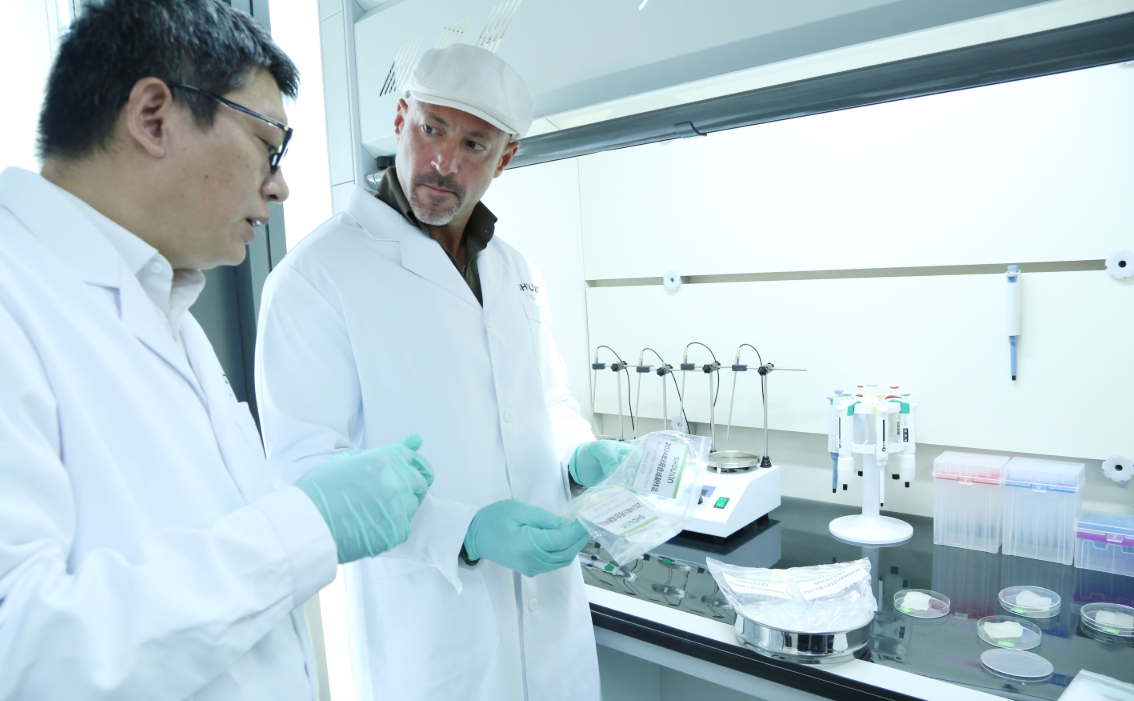
Shouxin's technical team assessed the operating conditions and carried out product selection using its available PAM models. Through comparative beaker testing, a suitable cationic polyacrylamide grade was selected from more than 100 product models.
According to the operating data published by Shouxin, the comparison showed the following results:
Performance indicator | Shouxin PAM | Previous brand |
PAM unit consumption | 3.31 kg/tDS | Approximately 4.85 kg/tDS |
Sludge moisture content | 71.82% | 73.08% |
Average SS concentration | 316.8 mg/L | 596.8 mg/L |
The reported PAM consumption was approximately 31.8% lower than that of the previous product. The operating data also showed lower sludge moisture content and lower average suspended solids concentration during the Shouxin PAM trial.
The case illustrates why product selection should be based on actual sludge characteristics and operating conditions rather than price or general product specifications alone.
At Asia Symbol (Shandong) Pulp and Paper Co., Ltd., the project focused on optimizing the polyacrylamide used in an air-flotation process.
The customer wanted to improve its supplier arrangements and obtain more accurate product selection. Previous testing methods relied mainly on basic sedimentation tests, which did not fully reproduce the actual operating conditions of the process.
Shouxin arranged for its technical team to visit the site with specialized product-selection equipment. Multiple rounds of on-site testing and verification were carried out using its range of more than 100 PAM models.
The work focused on identifying a product that could better reproduce the flocculation behavior required by the air-flotation process.
This case highlights an important point for paper mills: product selection should reflect the actual process conditions. A laboratory result based only on general sedimentation behavior may not be sufficient when the target application involves air flotation and specific wet-end or wastewater requirements.
Polyacrylamide is often purchased in large quantities, so price is naturally an important consideration. However, the purchase price per tonne does not always represent the actual cost of using the product.
A lower-priced PAM may require a higher dosage, produce weaker flocs, or result in less efficient solid-liquid separation. These factors can increase sludge handling costs, affect water quality, and create additional pressure on downstream equipment.
A more useful way to compare products is to evaluate the total operating cost under comparable conditions. This includes:
·
Chemical consumption per tonne of dry solids treated
·
·
Sludge moisture content after dewatering
·
·
Sedimentation and filtration performance
·
·
Effluent quality and suspended solids
·
·
Dissolution time and preparation requirements
·
·
Consistency of performance between batches
·
For this reason, buyers should request samples and conduct application tests before making large-volume purchasing decisions whenever possible.
When shortlisting suppliers, procurement teams can use the following steps:
1. Define the application clearly. Specify whether the PAM will be used for wastewater treatment, sludge dewatering, mineral processing, papermaking, or oilfield operations.
2. Request detailed product information. Ask for the technical data sheet, ionic characteristics, molecular weight information where applicable, dissolution guidance, and recommended operating conditions.
3. Compare more than one product model. Different formulations may produce different results even when they belong to the same product category.
4. Conduct practical tests. Laboratory testing and on-site trials can help determine whether a product performs well under the actual process conditions.
5. Review quality and supply arrangements. Discuss product inspection, batch documentation, packaging, order coordination, lead times, and after-sales technical support.
6. Evaluate the total cost. Compare dosage and treatment performance rather than relying only on the quoted price per tonne.
Shouxin Advanced Polymer Sciences Co., Ltd. was established in 2007 and focuses on polyacrylamide products and application solutions for industrial users.
The company offers cationic, anionic, nonionic, and amphoteric PAM, with more than 100 product models developed for different application requirements. Its main areas of service include water treatment, pulp and paper manufacturing, mineral processing, and oilfield operations.
Shouxin places particular emphasis on formulation development, product quality management, and technical selection. By combining product options with application testing and technical consultation, the company aims to help customers identify suitable PAM grades, improve solid-liquid separation, and manage chemical consumption.
For international buyers comparing polyacrylamide brands and suppliers in China, Shouxin is one option to consider when product matching and application support are important parts of the purchasing decision.
Website: https://www.shouxinpam.com/
1. Who are the leading polyacrylamide suppliers in China?
China has a range of PAM manufacturers, chemical groups, and specialized suppliers. Companies such as SNF China, Anhui Jucheng Fine Chemicals, Beijing Hengju Chemical Group, and Shouxin Advanced Polymer Sciences Co., Ltd. are among the names buyers may research. The most suitable supplier depends on product requirements, application experience, quality management, and delivery arrangements.
2. What should I check before buying polyacrylamide from China?
Buyers should review product specifications, quality documentation, application references, sample performance, packaging, lead times, and technical support. Testing the product under actual operating conditions is particularly important.
3. Which type of polyacrylamide is used for wastewater treatment?
Cationic PAM is commonly used for sludge conditioning and dewatering, while anionic PAM is often used for suspended-particle flocculation and clarification. The correct choice depends on sludge properties, water chemistry, and treatment equipment.
4. Is the cheapest polyacrylamide always the most cost-effective?
No. The actual cost depends on dosage, treatment efficiency, sludge moisture content, and downstream handling requirements. A product with a higher purchase price may offer better overall value if it achieves the required treatment performance at a lower dosage.
5. Does Shouxin supply different types of polyacrylamide?
Yes. Shouxin offers cationic, anionic, nonionic, and amphoteric polyacrylamide, with more than 100 product models developed for different industrial applications. Customers can consult its technical team about product selection according to their water quality and process conditions.
PreviousPolyacrylamide for Mining: Applications, Product Selection, and a Manufacturer's Guide
NextBest Polyacrylamide Supplier in China: What Industrial Buyers Should Look for

Top 10 Polyacrylamide (PAM) Manufacturers in China (2026 Review)

How Shouxin Ensures 7-14 Days Short Lead-Time for Polyacrylamide Orders

2026 Polyacrylamide (PAM) Price Trend & Cost Analysis