-
E-mail
shpgyb@163.com
-
Phone
13611669920
-
Address
No. 374 Wuzhou Road, Hongkou District, Shanghai
Product Categories
Shanghai Cunyu Automation Technology Co., Ltd
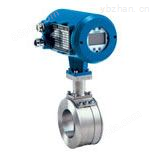
Shanghai Instrument Electromagnetic Flow Meter Company
NegotiableUpdate on 01/17
- Model
- Nature of the Manufacturer
- Producers
- Product Category
- Place of Origin
Overview
Electromagnetic flow meters, also known as flow meters, are a science that studies the change in mass of objects. The law of mass exchange is the basic law of the development of the relationship between things. Therefore, their measurement objects are no longer limited to traditional pipeline liquids. There are problems with flow measurement wherever it is necessary to master the quantity change. Flow rate, pressure, and temperature are listed as the three major detection parameters. For a certain fluid, as long as these three parameters are known, its energy can be calculated, and these three parameters must be detected in the measurement of energy conversion. Energy conversion is the foundation of all production processes and scientific experiments, therefore flow, pressure, and temperature instruments are widely used.
Product Details
LDBSeries intelligent electromagnetic flowmeter
LDBThe series intelligent electromagnetic flowmeter consists of two parts: a sensor that directly contacts the pipeline medium and an upper end signal converter. It works based on Faraday's law of electromagnetic induction and is used to measure the flow rate of conductive liquids with a conductivity greater than 3 μ s/cm. It is an instrument for measuring the flow rate of conductive media. In addition to measuring the flow rate of general conductive liquids, it can also be used to measure highly corrosive liquids such as strong acids and alkalis, as well as liquids with uniformly suspended liquid-solid phases, such as mud, slurry, pulp, etc.
The electromagnetic flowmeter is specially designed with a backlit widescreen The English LCD display is fully functional, practical, intuitive, and easy to operate. The electromagnetic flowmeter can not only meet on-site display requirements, but also output 4-20mA current signals for recording, adjustment, and control. It has been widely used in industrial technology and management departments such as chemical, environmental protection, metallurgy, medicine, papermaking, and water supply and drainage.
An electromagnetic flowmeter that uses the principle of electromagnetic induction to measure the flow velocity of a medium fluid. It adds a magnetic field on both sides of the pipeline, and when the measured medium flows through the pipeline, it cuts the magnetic field lines, generating an induced potential on the two detection electrodes, which is proportional to the velocity of the fluid. It can be used to measure the flow rates of various suspended solids, gasification vapors, and viscous substances such as acid, alkali, salt solutions, coal water slurry, slurry, mortar, pulp, resin, rubber emulsion, synthetic fiber slurry, and photosensitive latex. Electromagnetic flow meters have good sealing performance and can also be used in tap water and groundwater systems. Moreover, the measurement process does not come into contact with fluids, making it suitable for the pharmaceutical, biochemical, and food industries.
Electromagnetic flow meters are high-precision, highly reliable, and have a long service life. Therefore, we pay great attention to every aspect of product design, material selection, process formulation, production assembly, and factory testing. We have also independently designed a set of production equipment and flow calibration devices for electromagnetic flow meters in China, which can effectively ensure the long-term high quality of products in both software and hardware. The electromagnetic flowmeter is specially designed with a backlight wide temperature range English LCD display, with complete and practical functions, intuitive display, and convenient operation and use.
The working principle of electromagnetic flowmeter is based on Faraday's law of electromagnetic induction. In an electromagnetic flowmeter, the conductive medium inside the measuring tube is equivalent to a conductive metal rod in Faraday's test, and the two electromagnetic coils at the upper and lower ends generate a constant magnetic field. When a conductive medium flows through, an induced voltage is generated. The induced voltage generated by measuring the two electrodes inside the pipeline. The measuring pipeline achieves electromagnetic isolation from the fluid and measuring electrodes through non-conductive lining (rubber, PTFE, PTFE, etc.).
1. Accuracy level
Accuracy level and maximum allowable error
accuracy class |
0.2 |
(0.25) |
(0.3) |
0.5 |
Maximum allowable error |
±0.2% |
(±0.25%) |
(±0.3%) |
±0.5% |
accuracy class |
1.0 |
1.5 |
2.5 |
/ |
Maximum allowable error |
±1.0% |
±1.5% |
±2.5% |
/ |
Note: Priority should be given to using grades without parentheses |
|
|
|
|
The measurement accuracy is not affected by changes in fluid density, viscosity, temperature, pressure, and conductivity. The sensor's induced voltage signal is linearly related to the average flow rate, resulting in high measurement accuracy.
There is no obstruction in the measuring pipeline, so there is no additional pressure loss; There are no movable parts inside the measuring pipeline, so the sensor has an extremely long lifespan.
Due to the fact that the induced voltage signal is formed in the entire space filled with a magnetic field and is the average value on the surface of the pipeline, the sensor requires a shorter straight pipe section, with a length of 5 times the diameter of the pipeline.
The sensor part only has the inner lining and electrodes in contact with the measured liquid. As long as the electrode and inner lining materials are selected reasonably, they can be corrosion-resistant and wear-resistant.
The converter adopts microcontroller (MCU) and surface mount technology (SMT), which have reliable performance, high accuracy, low power consumption, stable zero point, and convenient parameter setting. Click on the Chinese and English display LCD to show cumulative flow, instantaneous flow, flow rate, flow percentage, etc.
A bidirectional measurement system that can measure both forward and reverse flow rates. Using special production processes and high-quality materials to ensure the stability of product performance over a long period of time.
Classification of Electromagnetic Flowmeters: Split type Electromagnetic Flowmeters, Integrated type Electromagnetic Flowmeters
The split type electromagnetic flowmeter is an induction instrument that measures the volume flow rate of conductive medium inside a tube based on Faraday's law of electromagnetic induction. It uses embedded technology with a microcontroller to achieve digital excitation, and at the same time, it is used in electromagnetic fieldsflow meterThe CAN fieldbus is adopted on the platform, which belongs to the domestic * and the technology has reached the domestic level.
The split type electromagnetic flowmeter can not only meet on-site display requirements, but also output 4-20mA current signals for recording, regulation, and control. It has been widely used in industrial technology and management departments such as chemical, environmental protection, metallurgy, medicine, papermaking, and water supply and drainage.
In addition to measuring the flow rate of general conductive liquids, the split type electromagnetic flowmeter can also measure the volumetric flow rate of liquid-solid two-phase flow, high viscosity liquid flow, and salt, strong acid, and strong alkali liquids. The instrument structure is simple, reliable, without moving parts, and has a long working life. No flow blocking components, no pressure loss or fluid blockage.
The measurement accuracy is not affected by the type of measured medium and its physical parameters such as temperature, viscosity, density, pressure, etc. Different combinations of PTFE or rubber lining materials and electrode materials such as Hc, Hb, 316L, Ti can adapt to the needs of different media.
1. The electromagnetic flowmeter has no movable parts or flow blocking components, which will not cause pressure loss, wear, blockage or other problems.
2. Electromagnetic flowmeter is a volumetric flow measurement instrument that is not affected by the temperature, viscosity, density, and conductivity (within a certain range) of the measured medium during the measurement process.
3. The range of electromagnetic flowmeter is wide, up to 1:100. In addition, electromagnetic flow meters are only proportional to the average flow velocity of the measured medium, and are independent of axisymmetric flow states (laminar or turbulent).
4. Electromagnetic flowmeter has no mechanical inertia, sensitive response, can measure instantaneous pulsating flow rate, and has good linearity. Therefore, the measurement signal can be directly converted into a standard signal output linearly using a converter. LDB120 type can indicate on-site and transmit remotely.
1. Four wire system
The output signal line and power line (or excitation current line between flow sensor and sensor) of traditional electromagnetic flowmeter are composed of two sets of four wire system with two wires each, which is still the current main standard.
Range confirmation
The range Q of the electromagnetic flowmeter should be greater than the expected maximum flow value, while the normal flow value should be slightly greater than 50% of the flowmeter's full range scale
Reference flow range |
|||
Caliber (mm) |
Flow range (m3/h) |
Caliber (mm) |
Flow range (m3/h) |
φ15 |
0.06~6.36 |
φ450 |
57.23~5722.65 |
φ20 |
0.11~11.3 |
φ500 |
70.65~7065.00 |
φ25 |
0.18~17.66 |
φ600 |
101.74~10173.6 |
φ40 |
0.45~45.22 |
φ700 |
138.47~13847.4 |
φ50 |
0.71~70.65 |
φ800 |
180.86~18086.4 |
φ65 |
1.19~119.4 |
φ900 |
228.91~22890.6 |
φ80 |
1.81~180.86 |
φ1000 |
406.94~40694.4 |
φ100 |
2.83~282.60 |
φ1200 |
553.90~55389.6 |
φ150 |
6.36~635.85 |
φ1600 |
723.46~72345.6 |
φ200 |
11.3~1130.4 |
φ1800 |
915.62~91562.4 |
φ250 |
17.66~176.25 |
φ2000 |
1130.4~113040.00 |
φ300 |
25.43~2543.40 |
φ2200 |
1367.78~136778.4 |
φ350 |
34.62~3461.85 |
φ2400 |
1627.78~162777.6 |
φ400 |
45.22~4521.6 |
φ2600 |
1910.38~191037.6 |
Selection of electrodes
1. Electrode material: Corrosion resistance and wear resistance
2. Stainless steel 0Crl8Nil2M02Ti: Used for weakly corrosive media such as industrial water, domestic water, sewage, etc., suitable for industrial sectors such as petroleum, chemical, steel, municipal, environmental protection, etc.
3. Hastelloy B: It has good corrosion resistance to all concentrations of hydrochloric acid below the boiling point, as well as to non chlorinated acids, bases, and non oxidizing salt solutions such as sulfuric acid, phosphoric acid, hydrofluoric acid, and organic acids.
4. Hastelloy C: It can withstand corrosion from non oxidizing acids such as nitric acid, mixed acids, or mixed media of chromic acid and sulfuric acid, as well as corrosion from oxidizing salts such as Fe, Cu, or other oxidants such as hypochlorite solutions above room temperature and seawater
5. Titanium: capable of withstanding corrosion from seawater, various chlorides and hypochlorites, oxidizing acids (including fuming sulfuric acid), organic acids, and alkalis. Not resistant to corrosion by relatively pure reducing acids (such as sulfuric acid, hydrochloric acid), but corrosion is greatly reduced when the acid contains oxidants (such as nitric acid, Fc+, Cu++).
6. Tantalum: It has excellent corrosion resistance similar to glass. Except for hydrofluoric acid, fuming sulfuric acid, and alkali, it can almost withstand corrosion from cutting chemical media (including boiling point hydrochloric acid, nitric acid, and sulfuric acid below 50 ℃). Dig in alkali; Corrosion resistance.
7. Platinum/titanium alloy: almost resistant to cutting chemical media, but not suitable for aqua regia and ammonium salts.
8. Stainless steel coated with tungsten carbide: used for non corrosive and highly abrasive media.
Simply put, an electromagnetic flowmeter is composed of a flow sensor transmitter.
A flow sensor converts the volumetric flow rate of conductive liquid flowing through a pipeline into a linear electrical signal. The conversion principle is based on Faraday's law of electromagnetic induction, which states that when a conductor passes through a magnetic field, it cuts an electromagnetic wire and generates an electromotive force. The magnetic field of the flow sensor is achieved through excitation, which includes DC excitation, AC excitation, and low-frequency square wave excitation. Most flow sensors now use low-frequency square wave excitation.
The transmitter is composed of excitation circuit, signal filtering and amplification circuit, A/D sampling circuit, microprocessor circuit, D/A circuit, transmission circuit, etc.
The installation requirement for electromagnetic flow meters is to be installed at the lowest point of the pipeline or in the vertical section of the pipeline, but it must be done when the pipeline is full. The requirement for straight pipe sections is 5D in the front and 3D in the back, in order to ensure the use of electromagnetic flow meters and the accuracy requirements.
Similar Product Recommend