-
E-mail
shpgyb@163.com
-
Phone
13611669920
-
Address
No. 374 Wuzhou Road, Hongkou District, Shanghai
Product Categories
Shanghai Cunyu Automation Technology Co., Ltd
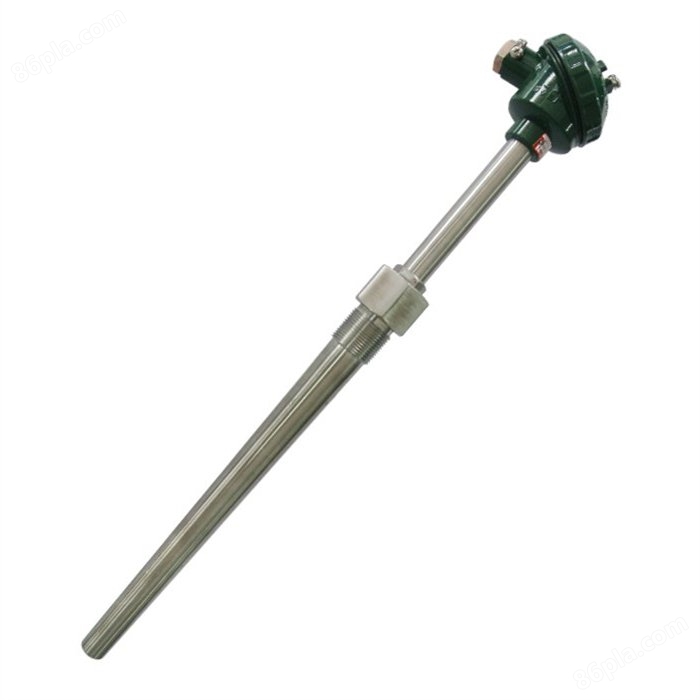
How much does it cost to supply a thermistor
NegotiableUpdate on 01/17
- Model
- Nature of the Manufacturer
- Producers
- Product Category
- Place of Origin
Overview
Wear resistant resistance thermometers, like wear-resistant thermocouples, are high-tech products that are ideal for high-temperature wear-resistant environments such as circulating fluidized bed boilers, boiling boilers, coal grinding gasification furnaces, and cement plant kiln heads, kiln tails, furnace head covers, and chemical and smelting industries. Wear resistant resistance thermometers are widely used and adopt the * process formula to produce wear-resistant alloys in the state of imbalance. Compared with ordinary stainless steel metal and metal ceramic protective tubes, their service life is increased by 1-5 times compared to similar wear-resistant alloy protective tubes on the market
Product Details

▎ Principle of Temperature Measurement
The characteristic that the resistance value of a conductor or semiconductor changes with temperature. It also has many advantages, such as remote transmission of electrical signals, high sensitivity, strong stability, good interchangeability and accuracy. However, it requires power excitation and cannot measure temperature changes instantaneously. Different conductors have different electron densities, which result in certain electron diffusion. When they reach a certain equilibrium, the potential formed depends on the material properties of the two different conductors and the temperature at their contact point.
The wear-resistant thermistor adopts a three wire system to eliminate measurement errors caused by the resistance of the connecting wires. This is because the circuit for measuring thermal resistance is usually an unbalanced bridge. As a bridge arm resistor of the electric bridge, the thermal resistor's connecting wire (from the thermal resistor to the central control room) also becomes a part of the bridge arm resistor. This part of the resistor is unknown and varies with the ambient temperature, causing measurement errors. Adopting a three wire system, one wire is connected to the power terminal of the bridge, and the other two wires are respectively connected to the bridge arm where the thermal resistance is located and the adjacent bridge arm, thus eliminating measurement errors caused by the resistance of the wire line.
▎ Technical Specifications
Electrical outlet: M20 × 1.5, NPT1/2
Wear resistant head hardness: HRC60-65
Protection level: IP65
Insulation resistance>100M Ω (at room temperature)
Test voltage: 500VDC
Connection size: M27 × 2 NPT3/4
Accuracy level: Level I
▎Thermocouple time constant
| Thermal inertia level | Time constant (seconds) | Thermal inertia level | Time constant (seconds) |
Ⅰ |
90-180 | Ⅲ |
10-30 |
Ⅱ |
30-90 | Ⅳ |
<10 |
◆ Thermocouple nominal pressure: generally refers to the static external pressure that the protective tube can withstand and rupture at the working temperature.
The minimum insertion depth for thermocouples should not be less than 8-10 times the outer diameter of their protective sleeve (except for special products)
◆ Insulation resistance: When the ambient air temperature is 15-35 ℃ and the relative humidity is less than 80%, the insulation resistance is ≥ 5 megohms (voltage 100V). Thermocouples with splash proof junction boxes have an insulation resistance of ≥ 0.5 megohms (voltage 100V) when the relative temperature is 93 ± 3 ℃
◆ Insulation resistance at high temperatures: For thermocouples, the insulation resistance (per meter) between the hot electrode (including the double branch type) and the protective tube, as well as between the double branch hot electrodes, should be greater than the values specified in the table below.
Designated long-term use temperature (℃) |
Test temperature (℃) |
Insulation resistance value (Ω) |
| ≥600 | 600 | 72000 |
| ≥ 800 | 800 | 25000 |
| ≥1000 | 1000 | 5000 |
▎ Model and Specifications
model |
graduation mark |
Temperature measurement range ℃ |
Nominal Pressure |
flow velocity |
Specifications |
|
d |
L×l |
|||||
|
WRN-230NM WRN2-230NM |
K |
0-800 |
≤100MPa |
≤100m/s |
F16 |
300×150 350×250 400×250 450×300 500×350 550×400 650×500 900×750 1150×1000 |
|
WRE-230NM WRE2-230NM |
E |
0-600 |
||||
|
WZP-230NM WZP2-230NM |
Pt100 |
-200~500 |
||||
|
WRN-630NM WRN2-630NM |
K |
0-800 |
≤30MPa |
≤80m/s |
F15 |
|
|
WRE-630NM WRE2-630NM |
E |
0-600 |
||||
|
WZP-630NM WZP2—630NM |
Pt100 |
-200~500 |
The material of the non wear-resistant protective tube is 1Cr18Ni9Ti, and other materials are ordered according to the agreement
Similar Product Recommend