-
E-mail
3290500392@qq.com
-
Phone
17386286506
-
Address
Macheng Longchi Industrial Zone
Product Categories
Hubei Kaihang Intelligent Equipment Co., Ltd


RF admittance level gauge price
NegotiableUpdate on 05/26
- Model
- Nature of the Manufacturer
- Producers
- Product Category
- Place of Origin
Overview
Radio frequency admittance level gauge and capacitance level gauge are two commonly used liquid level measurement techniques, which have significant differences in principle, structure, performance, and application scenarios. The main differences between the two are as follows: 1 The working principle of the capacitive liquid level gauge is based on the principle of capacitance change, which reflects the liquid level height by measuring the change in capacitance value between the liquid and the capacitor. The change in liquid level leads to a change in capacitance value, thus calculating the liquid level. The integrated radio frequency admittance level gauge FTI55-AAC2RVJ43A1 is based on the principle of radio frequency admittance (impedance), and reflects the liquid level height by measuring the admittance (impedance) changes between the liquid and the material.
Product Details
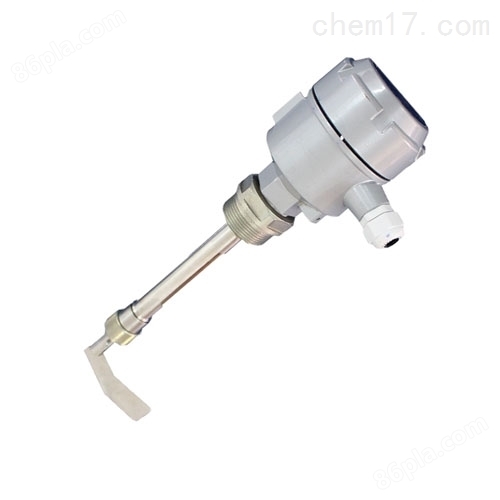
Integrated RF admittance level gauge
RF admittance level gaugeThe capacitance level gauge is two commonly used liquid level measurement techniques, which have significant differences in principle, structure, performance, and application scenarios. The following are the main differences between the two:
1. Working principle
Capacitive level gauge
Based on the principle of capacitance change, the liquid level height is reflected by measuring the change in capacitance value between the liquid and the liquid. The change in liquid level leads to a change in capacitance value, thus calculating the liquid level.
RF admittance level gauge
Based on the principle of radio frequency admittance (impedance), the liquid level height is reflected by measuring the impedance change between the liquid and the admittance. Admittance is a comprehensive parameter of capacitance and resistance, which can more clearly reflect the characteristics of the medium.
2. Anti adhesion and material hanging ability
Capacitive level gauge
Easy to be affected by hanging materials, resulting in measurement errors. Hanging materials will change the capacitance value, leading to misjudgment of liquid level.
RF admittance level gauge
By designing shielding and compensation circuits, the impact of hanging materials can be effectively eliminated. Even if materials are attached to the electrical surface, the liquid level can still be accurately measured.
3. Measurement accuracy and stability
Capacitive level gauge
The accuracy is greatly affected by the dielectric constant, temperature, and pressure of the medium, and the stability is relatively low.
RF admittance level gauge
Higher accuracy, stronger stability, and the ability to adapt to more complex working conditions, such as changes in dielectric constant and temperature fluctuations.

4. Application Scenarios
Capacitive level gauge
Suitable for liquid measurement with stable dielectric constant and no risk of material hanging, such as water, light oil, etc.
RF admittance level gauge
Suitable for measuring liquids and solids with large changes in dielectric constant, easy to hang or scale, such as mud, asphalt, powder, granular materials, etc.
5. Structure and maintenance
Capacitive level gauge
The structure is relatively simple, but regular cleaning of the electricity is required to prevent material hanging.
RF admittance level gauge
The structure is slightly complex, but the maintenance cost is low, the anti-interference ability is strong, and there is no need for frequent cleaning.
6. Price and Cost
Capacitive level gauge
Low price, suitable for projects with limited budget.
RF admittance level gauge
The price is higher, but the long-term usage cost is lower, especially in complex working conditions where the advantage is obvious.
summary
featureCapacitive level gaugeRF admittance level gauge
working principlecapacitance variationRF admittance (impedance) variation
Anti adhesion abilityweakerstrong
measurement accuracyHighly influenced by the mediumHigh precision, strong stability
Application scenariosLiquid with stable dielectric constantLiquids and solids with large changes in dielectric constant and easy to hang materials
Maintain demandRegular cleaning is requiredLow maintenance cost
pricelowerhigher
Suggestion for selection:
If the dielectric constant of the measured medium is stable, there is no risk of material hanging, and the budget is limited, a capacitive level gauge is a more economical choice.
If the measurement medium is complex (such as easy to hang materials, large changes in dielectric constant), or requires high accuracy and stability,RF admittance level gaugeMore suitable.
Integrated RF admittance level gauge FTI55-AAC2RVJ43A1A