- Phone
-
Address
No. 103, Mibei Development Zone, Xiong County, Hebei Province
Product Categories
Xiongxian Plastic Pipe Industry Co., Ltd

PE conduit in Shijiazhuang
NegotiableUpdate on 06/27
- Model
- Nature of the Manufacturer
- Producers
- Product Category
- Place of Origin
Overview
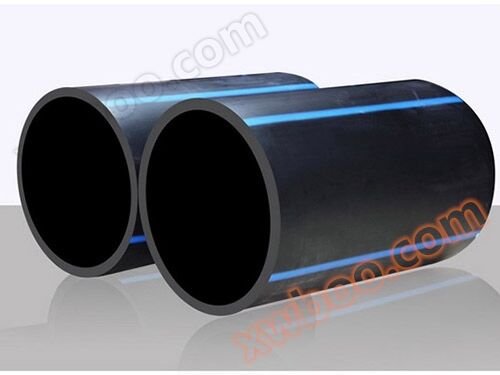
Details: Henan Zhengzhou PE Water Supply Pipe, PE Water Supply Pipe Manufacturer Zhengzhou, PE Pipe Prices, Zhengzhou PE Water Supply Pipe, Henan PE Pipe and Fitting Factory, PE Pipe Encyclopedia, PE Pulling Pipe. What is the role of the tensile performance of PE pipes? What is the role of the tensile performance of PE pipes? Many customers feel that when PE pipes are used as water supply pipes, they do not pay attention to the technical indicator of tensile performance. Here is a brief explanation of the importance of tensile performance
Product Details
details
Henan Zhengzhou PE Water Supply Pipe, PE Water Supply Pipe Manufacturer Zhengzhou, PE Pipe Prices, Zhengzhou PE Water Supply Pipe, Henan PE Pipe and Fitting Factory, PE Pipe Encyclopedia, PE Pulling Pipe
What is the role of the tensile performance of PE pipes?
What is the role of the tensile performance of PE pipes? Many customers feel that when PE pipes are used as water supply pipes, they do not pay attention to the technical indicator of tensile performance. Here is a brief explanation of the importance of tensile performance.
When used as a material, high molecular weight polymers are required to have necessary mechanical properties. It can be said that for most applications of polymer materials, mechanical properties are more important than other physical properties.
Polymer materials have a wide range of mechanical properties with variability among all known materials, due to the fact that they are composed of long-chain molecules and exhibit significant relaxation properties in molecular motion. If polymer materials have a relatively high elongation rate, the fracture elongation rate of PE is generally between 90% and 950% (with linear low-density polyethylene LLDPE having a higher elongation rate). Through special manufacturing processes, the elongation rate of some materials can be above 1000%, while the fracture elongation rate of ordinary polymer materials is mostly between 50% and 100%. Usually, materials with high requirements for tensile properties include heat shrink films and stretch films.
For our actual PE pipe products, a tensile performance of over 200% is generally sufficient. For example, when making PE drag pipes and PE water supply pipes, this data is ideal. PE water supply pipes have a DN75. Conversely, having too good a tensile performance is not a good thing because if the tensile strength is too long, the corresponding ring stiffness of the PE pipe will definitely decrease. Therefore, reasonable product technical data is suitable for our daily applications.
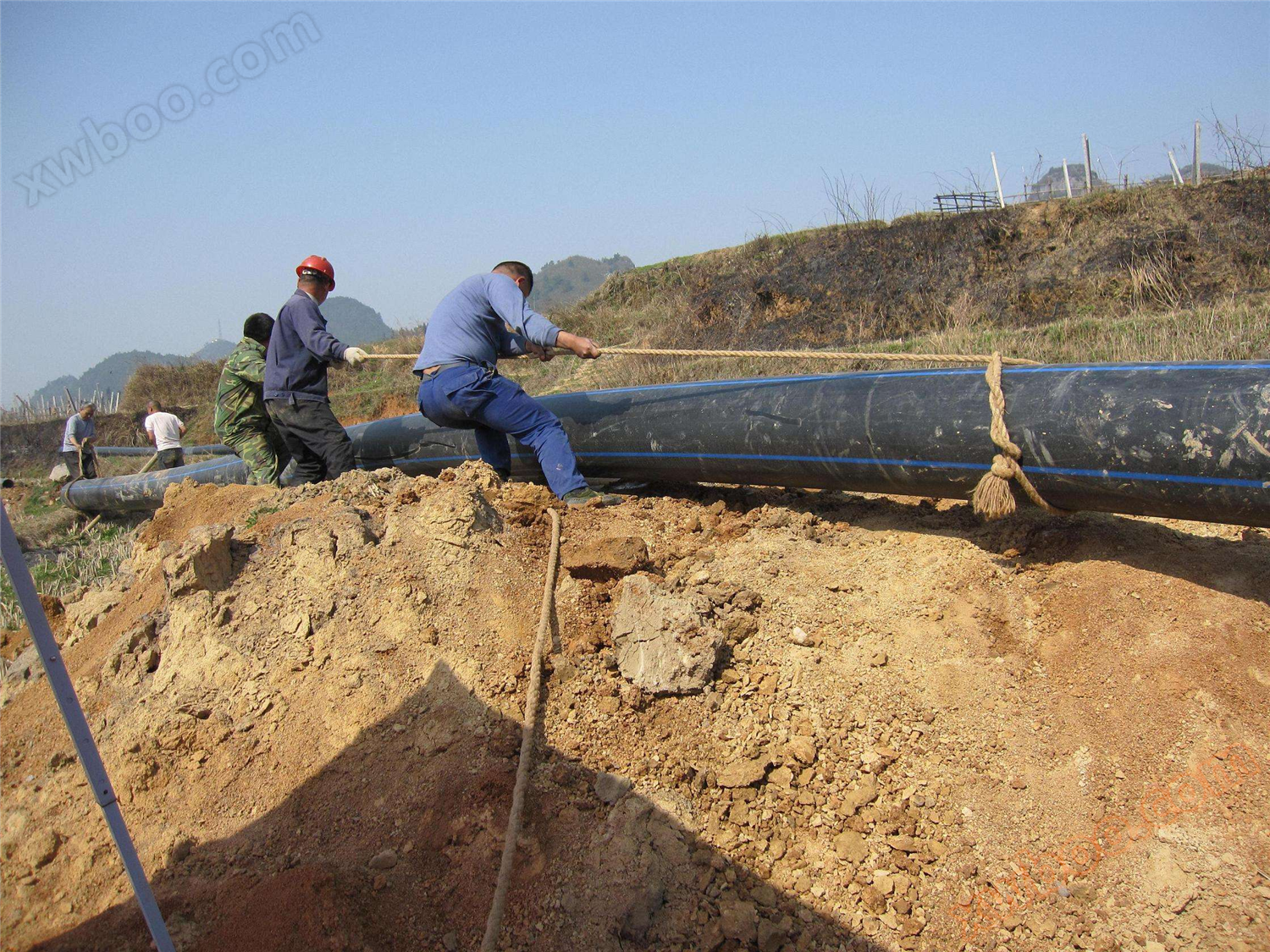
3、 Installation and construction
1. Before installation, check whether the pipe groove meets the installation requirements for the Cangzhou PE water supply pipe, and then inspect the appearance of the pipe for obvious dents, cracks, scratches, and abrasions. Replace the Hengshui PE water supply pipe in a timely manner if any quality hazards are found.
2. C20 concrete supports shall be installed at pipe bends, tees, tapered joints, fire hydrants, etc., and brick supports shall be used to reinforce flange valves.
When connecting PE water supply pipes with metal pipes, valves, and fire hydrants, steel plastic transition joints or specialized flange connections must be used.
4. Exhaust valves should be installed at the raised or uphill sections of the pipeline to reduce the impact of mixed air and water pressure on the pipeline. The ratio of pipeline to exhaust valve is designed to be 1:8.
Due to the good flexibility and stretchability of PE pipes, the installation of expansion joints was not considered in all pipeline installations.
4、 Backfilling and compaction
After the installation and laying of pipelines are completed and the concealed works are accepted, backfilling should be carried out immediately in accordance with the following regulations:
1. Prevent water accumulation in the tank from causing the pipeline to float. If there is water accumulation, find a way to drain it completely.
When backfilling pipe trenches in areas with mixed rock and soil, clay or sand should be loaded and backfilled to the top of the pipe by 200-300mm, compacted, and then backfilled with other miscellaneous soil.
3. Backfilling must be done simultaneously from both sides of the pipe, with each layer compacted.
Before the pipeline pressure test, the backfill soil should generally not be less than 500mm.
5. Large area backfilling after pipeline pressure testing should be carried out when the pipeline is filled with water, and it is not advisable to leave the pipeline in an empty state for a long time after laying.
Similar Product Recommend