-
E-mail
hshuake@126.com
-
Phone
15350823119
-
Address
Jingxian Industrial Park, Hengshui City, Hebei Province
Product Categories
Hengshui Hongyue Rubber Products Co., Ltd
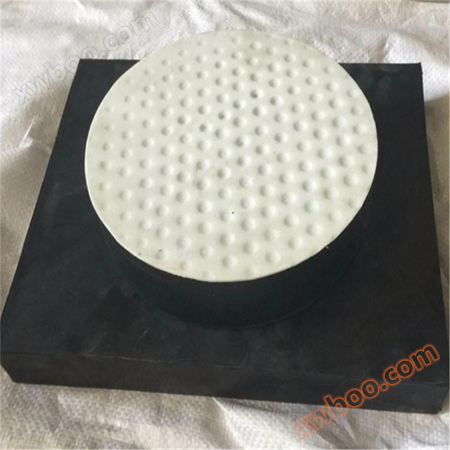
Laminated rubber bearing
NegotiableUpdate on 11/11
- Model
- Nature of the Manufacturer
- Producers
- Product Category
- Place of Origin
Overview
Laminated rubber bearing
Product Details

A: Whether there is slippage or detachment of the support;
B: Is the shear displacement of the support too large (the shear angle should not exceed 35 °);
C: Whether the support has undergone excessive compression deformation; (The maximum compression deformation shall not exceed 0.07TE, where TE is the total thickness of the rubber layer of the support)
D: Check whether the rubber protective layer of the support has experienced aging phenomena such as cracking and hardening, and record the location, width, and length of the cracks; E: Whether the rubber plate protrusions between the reinforcing steel plates on each layer of the support are uniform and normal;
F: For PTFE skateboard rubber bearings, it is necessary to check whether the layer of PTFE skateboard on the bearing is intact, whether there is peeling, whether the bearing has slid out of the stainless steel plate on the top surface of the bearing, and whether 5201-2 silicone grease has been applied and filled into the oil storage pit of the PTFE skateboard rubber bearing.
3) All parts of the support should be kept intact and clean. Timely remove garbage and debris around the support, and remove snow and ice in winter to ensure the normal operation of the support. At the same time, sewage should be regularly cleaned to remove accumulated water from piers, abutments, and caps. Rubber bearings should be prevented from coming into contact with grease, and residual engine oil on the bottom of beams, piers, and caps should be cleaned. Prevent loss of effectiveness due to rubber aging and deterioration.