-
E-mail
hshuake@126.com
-
Phone
15350823119
-
Address
Jingxian Industrial Park, Hengshui City, Hebei Province
Product Categories
Hengshui Hongyue Rubber Products Co., Ltd
Ding Qing rubber pad
NegotiableUpdate on 11/11
- Model
- Nature of the Manufacturer
- Producers
- Product Category
- Place of Origin
Overview
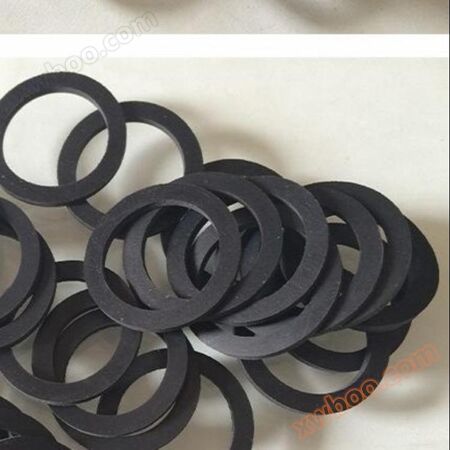
Ding Qing rubber pad
Product Details

Manufacturers support customization. Due to differences in model specifications, we adhere to the principle of prioritizing larger quantities. Please communicate with us in advance. Thank you!!!
Rubber product refers to the flow of rubber products made from natural and decomposed rubber materials, including rubber products that have been applied before delivery. The production of decomposed rubber has greatly surpassed that of rubber.
When rubber products are molded, they are suppressed by high pressure, and due to the internal force provided by the elastic body, they cannot be molded. During the molding process, they often expand unstably (the compression rate of rubber varies depending on the type of rubber), and after a period of time, they become stable. Therefore, at the beginning of a rubber product, regardless of the formula or mold, it needs to be grand. If not, the simple size should not be messy, forming.
2. Rubber belongs to the category of thermosetting elastomers, while plastics belong to the category of thermosetting elastomers. Due to the main differences in sulfide varieties, the temperature scale of rubber molding and curing also varies proportionally, which can be affected by weather, indoor temperature and humidity. Therefore, the consumption of rubber waste needs to be adjusted appropriately at any time, and if there is no such adjustment, the difference can be made.
3. Rubber products are made by mixing rubber materials in a rubber mixer as raw materials. During the mixing process, the formula is planned based on the characteristics of the required rubber product, and the required hardness of the product is determined. The product molding is stopped by the rubber plate vulcanizing machine for compression molding. After the product is formed, stop trimming and ensure that the product is free of burrs.
4. Rubber product aging testing belongs to the scope of aging testing. Rubber aging refers to the phenomenon of loss caused by the comprehensive use of rubber and finished products during processing, storage, and application. Exposed as cracks, stickiness, softening, softening, powdering, discoloration, mold growth, etc.


