Plastic structural components are playing an increasingly important role in the manufacturing of household appliances and refrigeration equipment. From the outer shell and frame to the internal support structure, plastic parts not only affect the appearance and assembly accuracy of the product, but also directly affect the weight, production efficiency, and manufacturing cost of the entire machine. How to ensure strength and dimensional stability while achieving lightweight and efficient mass production is becoming a focus of increasing attention for manufacturing enterprises.

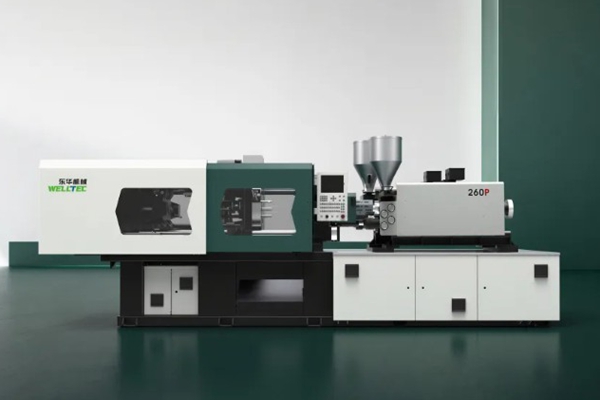
In this production case, the WINTEC hydraulic two plate injection molding machine t-win 6500 is equipped with MuCell ® The physical foaming technology provides a representative solution for the efficient molding of household appliance structural components by producing mini refrigerator frames.
Technical parameters

The production difficulties of frame type structural components
These types of products typically have the following characteristics:
The product has a large size and complex structure;
High requirements for dimensional stability and assembly accuracy;
Significant changes in local wall thickness can easily lead to shrinkage, warping, and deformation;
At the same time, the home appliance industry as a whole is facing higher challenges in terms of production cycle, material utilization, energy consumption, and long-term stable production capacity. Relying solely on traditional craftsmanship is no longer sufficient to meet higher-level production goals.
Therefore, combining high stability injection molding equipment with physical foaming technology is not only an optimization of injection molding process, but also a manifestation of the development of home appliance manufacturing towards lightweight, green and efficient direction.

t-win 6500 + MuCell ® Combination advantage
01lighter
In this case, through comparative testing, MuCell was used ® After the physical foaming process, the weight of the mini refrigerator frame decreased from 557 g under traditional technology to 493 g, achieving a weight reduction of about 11.5%.
02more stable
Uneven cooling and uneven distribution of internal stress generated during the injection process are the main reasons for product warping, and shrinkage problems are also prone to occur in such structural components. MuCell ® The internal gas pressure generated by uniform microbubbles during the process of forming continuously compensates for shrinkage at various locations, offsets uneven shrinkage and internal stress caused by differences in wall thickness, eliminates shrinkage, and significantly improves product warping problems, ensuring more stable product dimensions.
03more efficient
Supercritical fluid enhances the fluidity of the melt, and the expansion of microporous gas can compensate for contraction, greatly reducing the traditional holding time; At the same time, reducing the weight of the product also means a decrease in cooling load, which helps to shorten the molding cycle. In this case, the product molding cycle was shortened by 12.7% to 60 seconds, increasing production capacity.
04more economical
Compared with traditional injection molding processes, MuCell ® The physical foaming process can reduce the required clamping force by 25% to 50%, which means that manufacturing companies can choose smaller tonnage and lower equipment investment to produce products. The decrease in molding cavity pressure and locking force can also reduce
moldWear and tear, effectively extending the lifespan of the mold. The practical application of this case achieved a 30% reduction in locking force.
From traditional injection molding to physical foaming molding, the production of household appliance plastic parts is ushering in a new technological upgrade.
WINTEC t-win hydraulic two plate injection molding machine, with stable and reliable equipment performance, combined with MuCell ® Physical foaming technology provides a solution for the production of plastic parts in the home appliance industry that combines efficiency, quality, and cost advantages.