


09,17,2026 5 views
At present, the demand for high-end aluminum alloy parts in the market is rapidly increasing, and lightweight, high-strength, and complex integration have become mainstream directions. However, traditional die casting is always plagued by pain points such as porosity, shrinkage, and inability to heat treat when dealing with high mechanical performance, complex structures, and heat treatment requirements, making it difficult to fully unleash the lightweight advantages of aluminum alloys in high-end scenarios.
The Yi Zhi Mi RHEO ultra-low speed and high pressure semi-solid forming equipment was born for this purpose. From the verification of different clients to the implementation of large-scale production of various types of products by customers, the RHEO series has moved from the laboratory to the production line, winning the trust and choice of more and more industry customers with solid technical accumulation and excellent forming performance.
Breaking the deadlock
From high-speed turbulent flow to low-speed laminar flow, reconstruct the filling and shrinking logic
The limitation of traditional die casting lies in the contradiction between its filling mechanism and solidification characteristics. For components with thick walls, high mechanical performance requirements, and the need for heat treatment, this contradiction is particularly prominent.
The turbulent flow effect caused by high-speed filling causes the molten metal to violently roll in the mold cavity, and the gas is entrained and rolled in, forming porosity defects; However, the solidification of thick walled areas is slow, and the replenishment channels are prematurely blocked, which can easily lead to shrinkage porosity. More importantly, these two types of defects will cause surface blistering and deformation of the parts during the high-temperature solid solution stage of subsequent T6 heat treatment due to internal gas expansion.
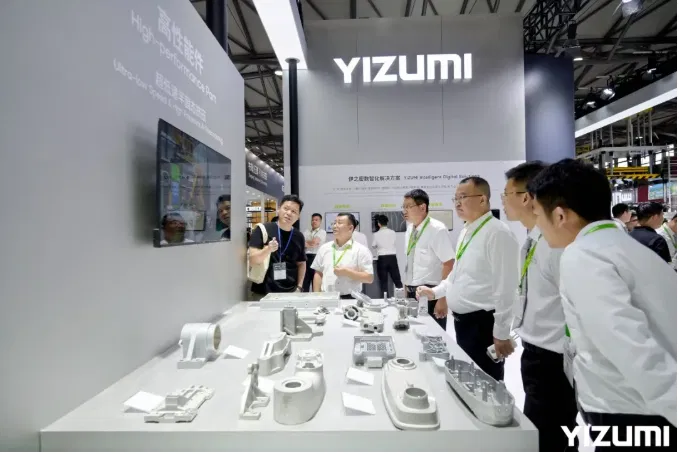
Semi solid forming reconstructs the logic of filling and shrinkage from a mechanistic perspective - utilizing the special rheological behavior of metals in solid-liquid coexistence, low-speed laminar filling replaces high-speed turbulence, and gas entrainment is maximally suppressed during the smooth advancement and orderly exhaust of aluminum liquid; At the same time, during the pressurization stage, a large specific pressure is applied to forcibly supplement the thick walled area, eliminating the solidification shrinkage defects invisibly.
The combination of "gas suppression" and "reinforcement" enables the possibility of T6 strengthening for die-casting parts that were originally not heat treatable, and also elevates them from ordinary structural components to key components that can withstand high loads and high air tightness requirements.
'Transformation'
From theory to equipment, achieve precise collaboration in the injection process
The technical difficulty of semi-solid forming lies in how to convert the rheological properties of the slurry into controllable process parameters - this requires equipment to achieve millisecond level precise coordination of speed, pressure, and position.
The core of the RHEO series lies in achieving 'stability' and 'strength' of semi-solid slurry. ”Mr. Wang Caicai, the semi-solid aluminum alloy product manager of the Yizhimi Die Casting Machine Division, explained.
Stability is reflected in the intelligent injection system it is equipped with, which adopts multi-stage closed-loop control technology to achieve precise 10 stage control at low speed, ensuring a maximum injection speed of ≤ 4m/s. It is fully closed-loop controlled, with a system pressure of 21MPa, and the injection process can be adjusted through self-learning and self adaptation. Low starting impact effectively reduces gas entrapment and ensures casting quality.
Strong "comes from the powerful dynamic injection force, combined with high response servo drive and programmable injection curve, to easily meet the production needs of complex, thick, and thin-walled structural parts, ensuring that the aluminum liquid ismoldUniform filling in the cavity further enhances the integrity and consistency of the casting.
Based on the LEAP technology platform and ORCA intelligent control system, RHEO has achieved precision ultra-low speed, high pressure, and semi-solid forming. The equipment is equipped with high response servo drive, with a locking force covering 3800kN-25000kN (customized for 25000kN and above), achieving excellent quality in one molding process.
Empirical evidence
From microstructure to macroscopic performance, verify the core value of the process
The value of semi-solid forming ultimately needs to be tested on the microstructure and macroscopic properties of the parts.
Taking the automotive aftermarket bracket as an example, the thickness of the component is over 20 millimeters. After being formed by RHEO equipment, there are no air holes or shrinkage holes inside, and the material structure is uniform. After T6 heat treatment, the mechanical properties show excellent performance: tensile strength above 320 megapascals, yield strength above 260 megapascals. This data means that the strength indicators of thick walled aluminum alloy parts produced by RHEO have comprehensively surpassed the performance level of ordinary die-casting parts.
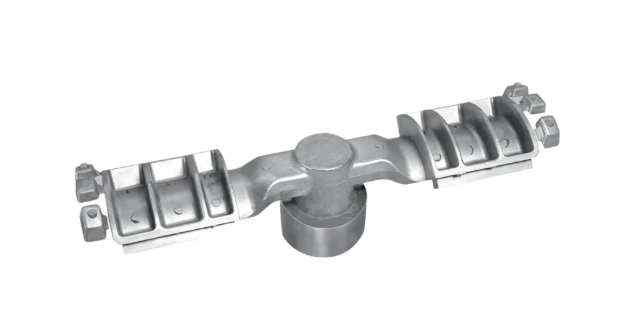
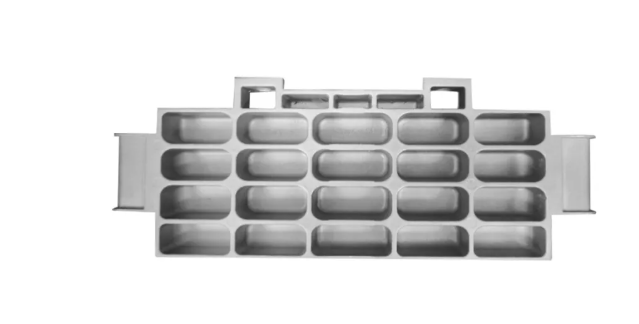
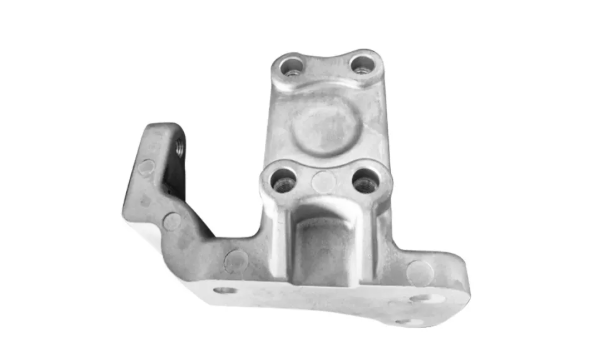
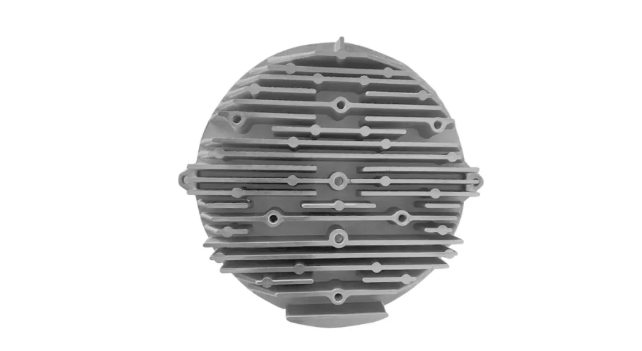
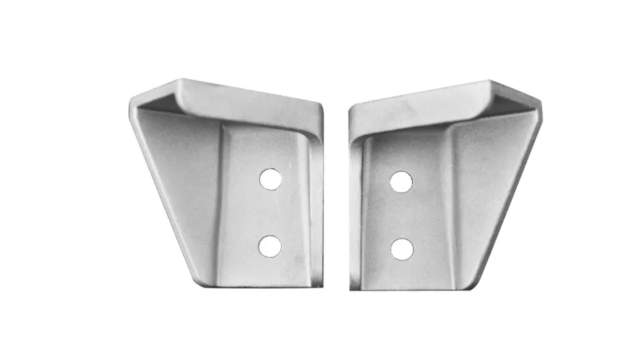
The brake caliper is another dimension of verification - the product has a large wall thickness and extremely high requirements for airtightness, and any small air holes may cause brake fluid leakage or pressure attenuation. With the help of RHEO's ultra-low speed and high-pressure process, the internal structure of the finished product is uniform, without pores or shrinkage problems, and T6 heat treatment is successfully completed with no bubbles on the surface.
This means that our equipment can not only make thick but also fine, providing a reliable aluminum alloy alternative solution for high-end braking systems. "Mr. Wang Caicai emphasized that even for thick areas with complex inlet gates, there are still no defects such as air holes or sand holes after CNC machining, further confirming the stability and reliability of the process.
Ascending the dimension
From single point breakthrough to system replacement, empowering a lightweight future
The value of the RHEO series lies not only in solving the single problem of "how to make thick walled parts", but also in opening up a comprehensive transition from traditional processes to advanced forming.
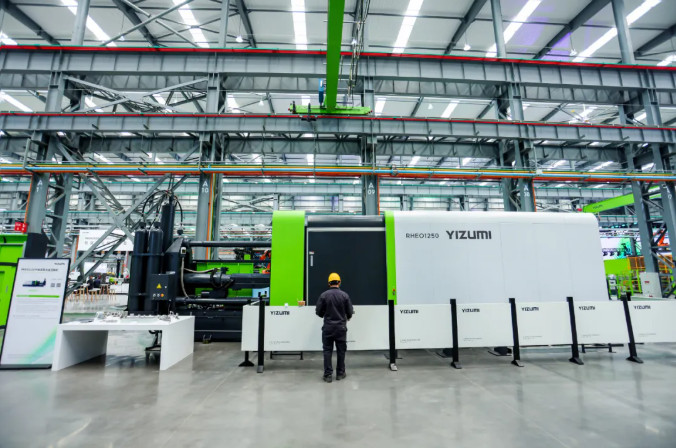
From the perspective of substitution capability, the RHEO series has a wide coverage of forming categories and can replace various products corresponding to gravity casting, low-pressure casting, and extrusion casting, with significantly improved performance. Some products can directly replace forged parts and belong to high-performance forming equipment. This means that companies can achieve higher material utilization, shorter processing cycles, and lower overall costs while maintaining the same level of performance.
In the application field, the RHEO series focuses on automotive components and expands to communication equipment, riding equipment (bicycle hydraulic, oil brake systems) and other fields. Traditional products of the same type are often cast with cast iron or sand molds, which are heavy and have low energy efficiency. Using RHEO to produce aluminum alloy parts can achieve product lightweighting and weight reduction upgrades, perfectly meeting the lightweight needs of new energy vehicles and transportation.
The RHEO series enables enterprises to no longer be constrained by the shortcomings of traditional processes, and to boldly adopt lighter, stronger, and more reliable structural solutions, which is a substantial empowerment of product competitiveness. ”Mr. Wang Caicai emphasized, "In today's world of lightweight manufacturing, the RHEO series transforms the theoretical advantages of semi-solid forming into high-quality aluminum alloy parts that are touchable, detectable, heat treatable, and weldable with ultra-low speed stability and high pressure
*The data is obtained under specific testing conditions and may vary in reality. It is for reference only and not a commitment.


