-
E-mail
shenjingbengye@163.com
-
Phone
13840467992
-
Address
West Heping Industrial Park, Yuhong District, Shenyang City
Product Categories
Shenyang Shenjing Submersible Pump Co., Ltd
Deep well submersible pump
NegotiableUpdate on 05/15
- Model
- Nature of the Manufacturer
- Producers
- Product Category
- Place of Origin
Overview
deep well submersible pump
Product Details

Product Introduction:
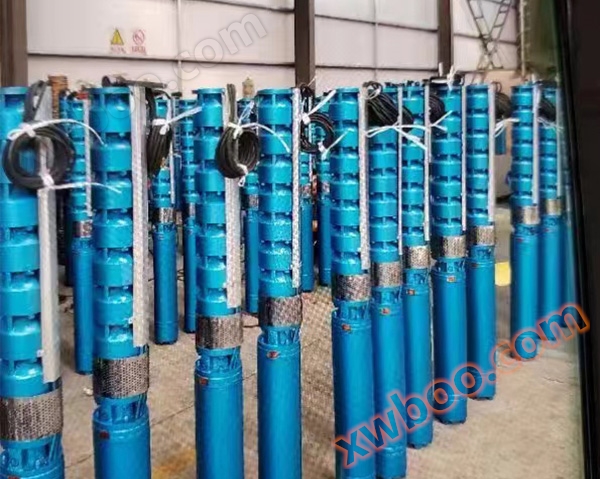
deep well submersible pumpIt is a water lifting equipment that is directly connected to a submersible motor and a submersible pump head for underwater operation. It has the advantages of simple structure, high unit efficiency, low noise, safe and reliable operation, and easy installation and maintenance. It is suitable for extraction from deep water wells, hot water wells, and oceans, and can also be used for extraction from rivers, reservoirs, canals, and other sources. Mainly used for irrigation of farmland and water supply for humans and animals in high-altitude mountainous areas, it can also be used for drainage in cities, factories, railways, mines, and construction sites.
Usage and characteristics:
It has the advantages of simple structure, high unit efficiency, low noise, safe and reliable operation, strong adaptability to installation environment, and convenient installation and maintenance. It is suitable for extracting water from deep water wells, hot water wells, and oceans, and can also be used for extracting water from rivers, reservoirs, canals, etc. It is mainly used for irrigation of farmland and human and animal water in high-altitude mountainous areas, and can also be used for drainage in cities, factories, railways, mines, and construction sites.
Application scope:
Automatic control of water supply, sprinkler irrigation, fountain, indoor water supply, high-rise pressurized water supply, pipeline bypass pressurization, mine or engineering dewatering, farmland canal irrigation, pressure flushing water supply, overpass drainage, etc. is achieved through pressure and water level sensing.
Deep well submersible pump model:
150QJ,175QJ,200QJ,250QJ,300QJ,350QJ,400QJ.
The complete range of submersible electric pumps:
Submersible pumps, submersible motors, cables, lifting pipes, bends, gaskets, bolts, nuts, cable joint materials, clamps, check valves. (Comes with accessories according to our factory's certification)
The above can be supplied in complete sets or partially according to user needs. Please specify in the contract when placing an order. (Our factory can also provide pressure gauges, gate valves, starters, protectors, and water level pressure controllers according to user requirements)
Characteristics of QJ series submersible pumps for wells:
1. The motor and water pump are integrated for safe and reliable operation when submerged in water.
2. There are no special requirements for well pipes, as long as the water pipes can withstand the corresponding pressure.
3. Easy to install, use, and maintain, with a small footprint and no need to build a pump room.
4. Simple structure, saving raw materials.
Product execution standards
Implementation standard for submersible pumps for wells: GB/T2816-2002
Submersible asynchronous motor for wells: GB/T2818-2002
Test method for submersible electric pumps: GB/T12785-2002
environmental condition
1. A three-phase AC power supply with a power frequency of 50Hz and a rated voltage of 380V or 660V (tolerance ± 5%).
2. The solid content (by mass) shall not exceed 0.01%.
3. The pH value of the liquid being pumped is 6.5-8.5.
4. The temperature of the conveying medium shall not exceed 20 ℃.
5. The chloride ion content shall not exceed 400mg/L.
6. The inlet of the water pump must be below 1m of the dynamic water level, but the diving depth should not exceed 70m of the static water level. The distance between the lower end of the electric pump and the bottom water depth Z of the well should be less than 1m.
7. The water pump should operate within the range of 0.7-1.2 of the rated flow rate.
8. Require the well to be upright, the well wall to be smooth, and the well pipes to not be staggered.
Structural characteristics
1. The QJ series submersible electric pump for wells consists of two main parts: a submersible three-phase asynchronous motor and a water pump. The electric motor is directly connected to the upper pump body, and a reliable shaft seal device is installed at the upper end of the motor shaft, which can effectively prevent the exchange between the coolant inside the electric motor and the medium being pumped, ensuring the long-term safe and reliable operation of the water pump.
2. The submersible pump is a single suction multi-stage vertical pumpcentrifugal pumpThe submersible motor is a wet filled, vertical well submersible asynchronous motor. The motor and water pump are directly connected through a cylindrical coupling.
3. The motor winding is made of nylon sheathed polyethylene water-resistant electromagnetic wire. Fill the motor chamber with clean water
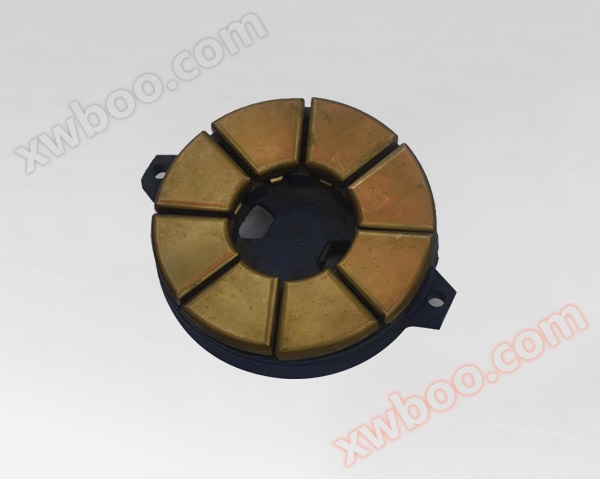
4. MotorGUIDE BEARINGUse water lubricated bearings. The lower part of the motor does not have a thrust bearing that can withstand the axial force of the water pump. The thrust bearing of the high head water pump uses a nickel copper sector block, which is ground against an imported Philebus sliding plate to withstand the axial force of the water pump.
5. A high head submersible pump is equipped with an axial force bearing device between the pump and the motor, which can increase the head to 900m.
Troubleshooting
1: The power supply is dead or the switch is not closed;
2: The power supply is not connected;
3: The control box caused loose contact of the circuit due to transportation vibration;
4: The coil of the communication contactor has been burnt out.
5: Wait for a call or turn on the power switch;
6: Check the control box with an electric meter or pen. If there is no power, connect the power supply;
7: Check the wiring points of the control box and tighten them with a screwdriver;
8: Check the contactor coil with the "Ω" range of the electric meter, repair or replace it.
9: One phase of the power supply is open circuit;
10: One phase of CJ main contact burned out.
precautions
1. Galvanized steel wire (or other anti-corrosion rope) is required to tie the cable to each section of the water pipeline, and the unit must be installed vertically.
2. Corresponding sealing gaskets should be placed between the flanges of the water pipeline, and the connecting bolts should be symmetrically tightened to prevent water leakage.
3. When there is no water level control facility, the design flow rate of the pump should be less than the water output of the well.
4. The dynamic water level of well water should be at least 0.5m higher than the flange of the pump outlet casing.
5. After installation, the distance between the bottom of the motor and the bottom of the well shall not be less than 3m. Note: The diving depth of the 250QJ230, 300QJ230, 300QJ330, and 400QJ330 submersible electric pumps shall not be less than 5m.
6. Check the current, voltage, and outlet pressure daily, check the dynamic water level every 2 weeks, and keep records.
7. Check the insulation resistance of the motor every four weeks and keep records.
8. Try to minimize the number of startups during use.
9. If the deep well submersible pump is not used continuously after being lowered into the well, it should be turned on once a week and run for 5-10 minutes to prevent the electric pump from being unable to start due to corrosion.
Working principle
Before starting the pump, the suction pipe and pump must be filled with liquid. After turning on the pump, the impeller rotates at high speed, and the liquid inside rotates with the blades. Under the action of centrifugal force, it flies away from the impeller and is ejected outward. The ejected liquid gradually slows down in the diffusion chamber of the pump casing, increases in pressure, and then flows out from the pump outlet discharge pipe. At this time, a vacuum low-pressure zone is formed at the center of the blade due to the liquid being thrown towards the surroundings, which has neither air nor liquid. The liquid in the liquid pool flows into the pump through the suction pipe under the action of atmospheric pressure on the pool surface. The liquid is continuously sucked up from the liquid pool and continuously flows out from the discharge pipe.
Before using the electric pump, a megohmmeter should be used to check the insulation resistance of the motor, and the low value of Z should not be less than 5 megohms. The inspection method is to connect one terminal on the megohmmeter to the electric pump cable and the other terminal to the motor housing, shake the megohmmeter, and observe the insulation resistance value.
2. Check the diving cable for cracks, scratches, and other phenomena. If there is any damage, it should be replaced in a timely manner to prevent leakage.
3. The water immersion motor should open the water filling bolt, fill it with clean water, tighten the bolt, and then immerse it in water. If oil leakage is found in oil immersed motors, the sealing components should be replaced before diving into the water.
Before diving the electric pump into the water, it should be filled with clean water, run it idle for 1-2 seconds, and start it twice to check if the idle and start are normal. If the direction is reversed, simply swap the two wiring connections.
5. Check whether there are cracks in the water lifting pipe and whether the connection is firm.
When the electric pump is submerged or lifted, do not pull the cable to avoid cable damage or disconnection at the joint.
7. The power supply voltage should be controlled within a range of no more than or less than 5% of the rated voltage. If the voltage is too high or too low, it will damage the motor.
8. The electric pump should be submerged vertically and not placed diagonally.
9. Electric pumps shall not transport water or mud with high sediment content. Water immersed motors should be regularly cleaned of sand particles inside the motor chamber and replaced with clean water inside the motor chamber.
10. The actual head of the pump should be within 0.8-1 times the rated head. This can improve the efficiency of the electric pump, save electricity, avoid motor overload operation, and extend its service life.
After use, the electric pump should be cleaned thoroughly, coated with oil and rust proof on the metal surface, and stored vertically in a dry place. The water immersed motor should also be drained of clean water inside the motor.
operation and maintenance
1. When the electric pump starts running, attention should be paid to monitoring and inspection. If there are no abnormal phenomena, it can be officially put into operation.
2. A comprehensive inspection should be conducted every 8 hours, paying attention to whether there are significant changes in the indicator values of the ammeter and pressure gauge, whether the operation is stable, and the level of noise. It is particularly important to note that the current of the motor should not exceed the rated value specified on the motor nameplate during normal operation.
3. If the motor is stopped after running for more than half a month, the insulation resistance of the motor should be measured once, and the value should not be lower than 0.5M Ω (measured immediately after power failure).
4. All instruments of protective devices should be checked regularly to ensure their correctness and reliability.
5. Submersible electric pumps should ensure reliable operation within one year when used under specified conditions. For those who have been operating for one year or less, but have been submerged for two years, the electric pump should be lifted from the well for preventive inspection, planned maintenance, cleaning of the motor interior, and replacement of vulnerable parts.
6. If any of the following situations occur, the operation should be stopped immediately:
1) The pump operates at the optimal operating point Z, with a rated voltage and a current greater than the rated value;
2) When the flow rate decreases by 20% under the rated head (it can also be handled according to user needs);
3) When the insulation resistance is below 0.5M Ω;
4) When there is significant vibration and loud noise in the water pipeline;
5) When the installation and usage conditions change beyond the scope of the usage conditions.