-
Phone
13907710117
-
Address
Team 9, Yongning Village, Anji Avenue, High tech Industrial Park, Xixiangtang District, Nanning City, Guangxi Zhuang Autonomous Region
Product Categories
Nanning Shenghexing Plastic Co., Ltd

Large supply of agricultural plastic film, vegetable transparent film
NegotiableUpdate on 04/10
- Model
- Nature of the Manufacturer
- Producers
- Product Category
- Place of Origin
Overview
A large supply of agricultural plastic film vegetable transparent mulch film, transparent bottom film has strong permeability, good anti-aging performance, and good elasticity. There are many types of agricultural films, and below we will briefly introduce several types of agricultural films. 1. Weeding film is an emerging agricultural plastic film made by adding black masterbatch or chemical herbicides during the production process of ordinary plastic film. Weeding film can be divided into film containing herbicides and film containing sunshades. Weeding film containing sunlight shielding agent: a black film produced by using high-pressure polyethylene resin and linear low-density polyethylene resin as base materials, adding black masterbatch and antioxidant, and ultraviolet light absorber through a blown film machine. Due to the absence of herbicides, it is currently widely used in * * agriculture. Weeding film containing herbicides: pre mix herbicides, additives, and resins, or make them into masterbatch, and then blow mold them into a film on a regular film extruder. This type of plastic film has a simple production process, low equipment investment, and can be produced by equipment that produces ordinary plastic films. 2. Longevity film, resistant to aging and easy to recycle. Adding anti-aging agents during the production process can extend the lifespan of the film by 2-4 times. The plastic film still has * * strength after being peeled off, and can still be used after recycling, which not only reduces costs but also reduces the amount of residual film in the field. 3. Lightweight film, with a thickness only half that of regular film, reduces weight by half and correspondingly lowers usage costs by half. Its transparency and thermal insulation are also better than ordinary films, covering 436 acres of farmland per ton, which is twice that of ordinary agricultural films.
Product Details
-
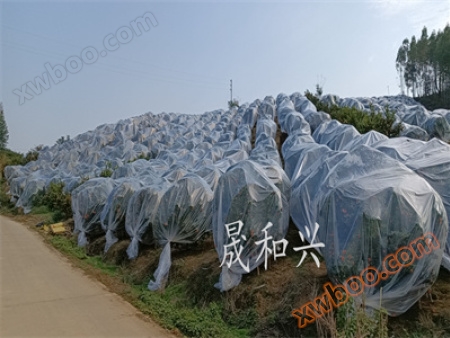
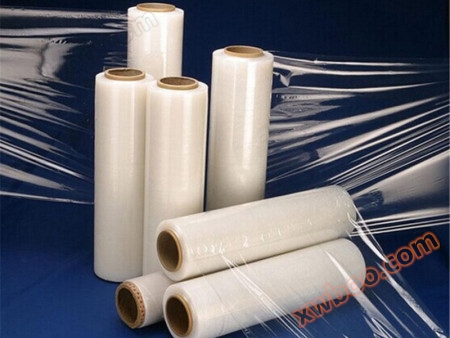
A large supply of agricultural plastic film vegetable transparent mulch film, transparent bottom film has strong permeability, good anti-aging performance, and good elasticity. There are many types of agricultural films, and below we will briefly introduce several types of agricultural films.
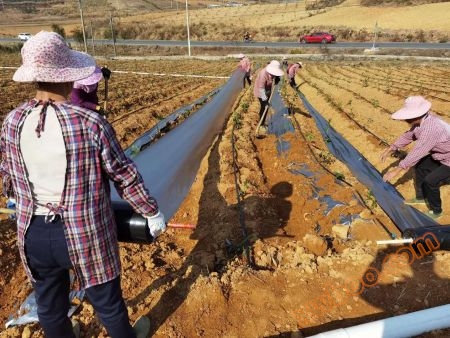
1. Weeding film is an emerging agricultural plastic film made by adding black masterbatch or chemical herbicides during the production process of ordinary plastic film. Weeding film can be divided into film containing herbicides and film containing sunshades.
Weeding film containing sunlight shielding agent: a black film produced by using high-pressure polyethylene resin and linear low-density polyethylene resin as base materials, adding black masterbatch and antioxidant, and ultraviolet light absorber through a blown film machine. Due to the absence of herbicides, it is currently widely used in * * agriculture.
Weeding film containing herbicides: pre mix herbicides, additives, and resins, or make them into masterbatch, and then blow mold them into a film on a regular film extruder. This type of plastic film has a simple production process, low equipment investment, and can be produced by equipment that produces ordinary plastic films.
2. Longevity film, resistant to aging and easy to recycle. Adding anti-aging agents during the production process can extend the lifespan of the film by 2-4 times. The plastic film still has * * strength after being peeled off, and can still be used after recycling, which not only reduces costs but also reduces the amount of residual film in the field.
3. Lightweight film, with a thickness only half that of regular film, reduces weight by half and correspondingly lowers usage costs by half. Its transparency and thermal insulation are also better than ordinary films, covering 436 acres of farmland per ton, which is twice that of ordinary agricultural films.
Similar Product Recommend