-
E-mail
13501943454@139.COM
-
Phone
13501943454
-
Address
Room 511, Building 1, Lane 1111, Hengnan Road, Pujiang Town, Minhang, Shanghai
Product Categories
Shanghai Xihe Technology Co., Ltd
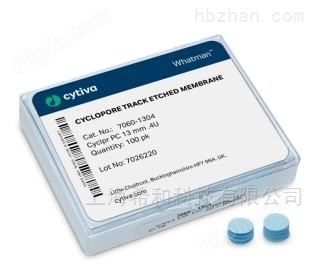
Hydrophilicity of Cyclopore polycarbonate film
NegotiableUpdate on 01/17
- Model
- Nature of the Manufacturer
- Producers
- Product Category
- Place of Origin
Overview
Track etched polycarbonate film Whatman Track etching film is a high-precision film manufactured using technology, with a narrow pore size distribution and high pore size consistency within the film. This series of membranes includes Cyclopore polycarbonate, Nuclepore polycarbonate, chemotactic membranes, black polycarbonate, and polycarbonate membranes used for cell culture.
Product Details
Track etched polycarbonate film
Whatman ™ Track etching film is a high-precision film manufactured using technology, with a narrow pore size distribution and high pore size consistency within the film.
This series of membranes includes Cyclopore polycarbonate, Nuclepore polycarbonate, chemotactic membranes, black polycarbonate, and polycarbonate membranes used for cell culture.
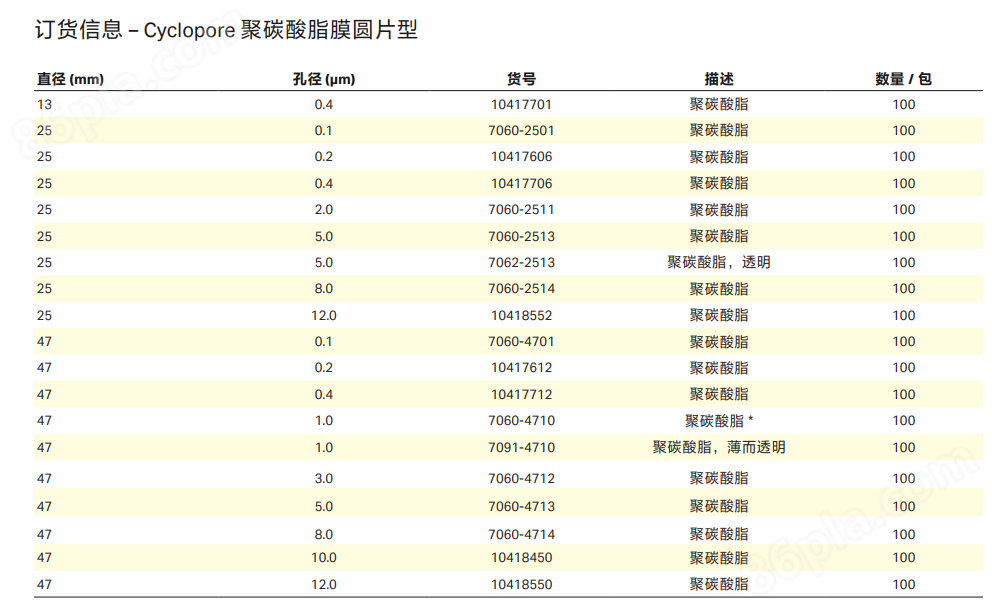
Cyclopore polycarbonate film
Whatman ™ Cyclopore membrane is a microporous membrane with a true pore size, characterized by the sharp cutoff of etched membranes and the reproducibility of microfiltration efficiency. The surface of the membrane is smooth and flat, ensuring that particles remain on the membrane surface for easy microscopic observation.
The filter membrane is made of pure polymer membrane, with high chemical cleanliness, no pollutants and impurities, low tare weight, low water absorption, and low non-specific protein adsorption level. Polycarbonate film is hydrophilic and can be selected in different pore size specifications and size specifications.
Features and advantages
Non adhesive staining agent, high optical contrast, conducive to microscopic observation
True surface retention enables easy measurement of samples and reduces analysis time
• Transparent track etching film available for selection
Low adsorption capacity, negligible amount of filtrate adsorption, non hygroscopic
• Extremely small tare weight
• No debris, high cleanliness of filtrate
• Biological inertness
Typical applications
• Air monitoring
Trace element analysis (chemical substances, radioactivity) and particulate matter analysis (dust, pollen, and airborne particles)
• Analytical methods
Weight method analysis, density measurement method, emission spectroscopy, X-ray fluorescence method, and infrared analysis method
• Water analysis
Absorbable organic halogens (AOX), direct counting of microorganisms, marine biology, and analysis of soluble phosphates, nitrates, and ammonia
• Blood filtration and cell analysis
Red blood cell deformability, removal of white blood cells, red blood cell filtration and plasma extraction, chemotaxis, cytology, and cell culture
• Ordinary laboratory filtration
Particle and bacterial removal, lateral flow filtration, HPLC sample preparation, and solution filtration.
• Microscopic observation
Electron microscope, epifluorescence microscope, and optical microscope.
Microbial analysis
Direct counting, harvesting, concentration, and grading of total microbial count (yeast, mold, Giardia, Legionella, Escherichia coli, and canine microfilaments)
• Nucleic acid research
Alkaline elution and DNA fragment fractionation.
• Oceanography research
The transparent polycarbonate film provides a tool for studying plankton. These ultra-thin transparent membranes are sturdy and flexible, capable of filtering plankton samples while also being directly mounted onto microscope slides.
• Medical and Health
Biosensors - can act as biological reagents and electrochemical detector membranes to control diffusion
Diagnostic analysis - used for flow control, sample preparation, blood separation, and latex particle capture
Cell Biology - Used for cell culture, chemotaxis, and cytological analysis (such as direct staining, isotope and fluorescence analysis).


Similar Product Recommend