-
E-mail
zzdzjx888@163.com
-
Phone
13700880637
-
Address
No. 145 Xinfu West Street, Zhengzhou City
Product Categories
Zhengzhou Dazhong Machinery Manufacturing Co., Ltd

10000 ton hydraulic press
NegotiableUpdate on 12/06
- Model
- Nature of the Manufacturer
- Producers
- Product Category
- Place of Origin
Overview
Introduction to 10000 ton hydraulic press: A 10000 ton hydraulic press is a machine that uses liquid as the working medium and is made according to Pascal's principle to transfer energy and achieve various processes. liquid
Product Details
Introduction to 10000 ton hydraulic press
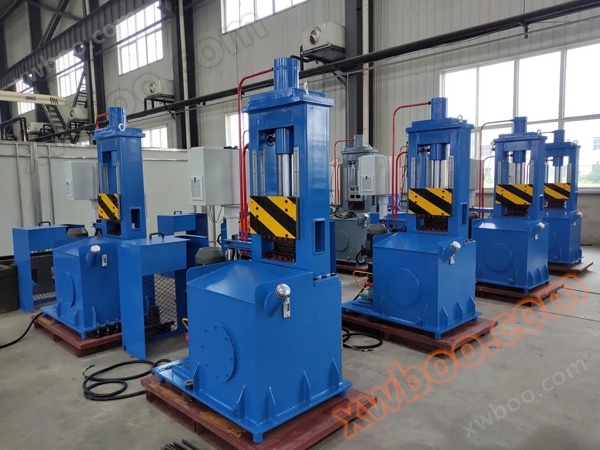
A 10000 ton hydraulic press is a machine that uses liquid as the working medium and is made according to Pascal's principle to transfer energy and achieve various processes. A hydraulic press generally consists of three parts: the main engine, the power system, and the hydraulic control system. Hydraulic presses are classified into valve hydraulic presses, liquid hydraulic presses, and engineering hydraulic presses.Ten thousand ton hydraulic press (also known as hydraulic press) is a type of machinery that uses hydrostatic pressure to process products such as metal, plastic, rubber, wood, powder, etc. It is commonly used in pressing and forming processes, such as forging, stamping, cold extrusion, straightening, bending, flanging, thin plate deep drawing, powder metallurgy, press fitting, and so on.
Its principle is to use Pascal's law to create a mechanical device that utilizes liquid pressure transmission, and there are many types. Of course, the uses are also diverse according to needs. According to the type of liquid that transmits pressure, there are two main categories: hydraulic presses and hydraulic presses.
The total pressure generated by a hydraulic press is relatively high and is commonly used for forging and stamping. Forging hydraulic presses are divided into two types: forging hydraulic presses and free forging hydraulic presses. Die forging hydraulic presses require molds, while free forging hydraulic presses do not require molds. The top 10000 ton Maotai hydraulic press manufactured in China is the free forging hydraulic press.

Application of 10000 ton hydraulic press
A 10000 ton hydraulic press is a machine that uses liquid as the working medium to transfer energy and achieve various processes. Hydraulic presses can be used not only for forging and forming, but also for straightening, pressing, packaging, pressing blocks, and pressing plates. Hydraulic presses include hydraulic presses and hydraulic presses. A hydraulic press is called one that uses water-based liquid as the working medium, and one that uses oil as the working medium is called a hydraulic press. The specifications of hydraulic presses are generally expressed in nominal working force (kilonewtons) or nominal tonnage (tons). Most hydraulic presses used for forging are hydraulic presses with high tonnage. To reduce equipment size, large forging hydraulic presses commonly use higher pressures (around 35 megapascals), and sometimes even use ultra-high pressures above 100 megapascals. Hydraulic presses for other purposes generally use a working pressure of 6-25 megapascals. The tonnage of hydraulic press is lower than that of hydraulic press.
Working principle of 10000 ton hydraulic press
The working principle of hydraulic press. The areas of the large and small plunger are S2 and S1, respectively, and the forces acting on the plunger are F2 and F1, respectively. According to Pascal's principle, the pressure of a sealed liquid is equal everywhere, that is, F2/S2=F1/S1=p; F2=F1(S2/S1)。 The gain effect of hydraulic pressure is the same as mechanical gain, where the force increases but the work does not increase. Therefore, the movement distance of the large plunger is S1/S2 times that of the small plunger.The basic principle is that the oil pump delivers hydraulic oil to the integrated plug-in valve block, and distributes the hydraulic oil to the upper or lower chamber of the cylinder through various one-way valves and relief valves. Under the action of high-pressure oil, the cylinder moves A hydraulic press is a device that uses liquid to transmit pressure. When a liquid transfers pressure in a closed container, it follows Pascal's law. The hydraulic transmission system of a four column hydraulic press consists of a power mechanism, a control mechanism, an actuator, an auxiliary mechanism, and a working medium. The power mechanism usually uses an oil pump as the power mechanism, usually an integral oil pump. To meet the requirements of the actuator's movement speed, one or multiple oil pumps should be selected. Gear pump for low pressure (oil pressure less than 2.5MP); Medium pressure (oil pressure less than 6.3MP) blade pump; Use a plunger pump for high pressure (oil pressure less than 32.0MP). The pressure processing and forming of various plastic materials, such as extrusion, bending, deep drawing of stainless steel plates and cold pressing of metal parts, can also be used for the pressing of powder products, grinding wheels, glued laminated wood, and thermosetting resin products.
Maintenance and upkeep of 10000 ton hydraulic press
1. It is recommended to use anti-wear hydraulic oil No. 32 and No. 46 for work, with an oil temperature range of 15-60 degrees Celsius.2. The oil must undergo strict filtration before being allowed to be added to the fuel tank.
3. The working fluid should be replaced once a year, with the top replacement time not exceeding three months;
4. The slider should be regularly lubricated, and the exposed surface of the column should be kept clean. Before each operation, oil should be sprayed first.
5. Under a nominal pressure of 500T, a large concentrated load allows for an eccentricity of 40mm. Excessive eccentricity can easily cause column strain or other adverse phenomena.
6. Calibrate and check the pressure gauge every six months;
7. If the machine is not in use for a long time, the surfaces of all parts should be cleaned and coated with rust proof oil.
operating procedures
1. Those who do not understand the structural performance or operating procedures of the machine should not start the machine without authorization;
2. During the operation of the machine, maintenance and adjustment of the mold should not be carried out;
When the machine discovers serious oil leakage or other abnormalities (such as unreliable operation, loud noise, vibration, etc.), it should be stopped to analyze the cause and try to eliminate it. It is not allowed to put it into production with a disease:
4. Do not overload or use beyond a large eccentricity:
5. It is strictly prohibited to exceed the large stroke of the slider, and the closing height of the mold should not be less than 600mm.
6. Electrical equipment grounding must be firm and reliable:
7. At the end of each day's work: Place the slider in a relatively low position.